

Montessori toys by age (0 to 4 years)
If you are wondering about Montessori toys what age If it really fits, you've come to the right place. Instead of a list of individual gift ideas, we look at what your child is practicing at each stage, and what type of toys logically aligns with that. After all, a toy that is fantastic for a six-month-old baby often ends up unused in the basket a year later. This guide about Montessori toys by age helps you choose based on the stage your child is in, not on an age sticker on the box. Along the way, we pay extra attention to motor skills, because it is precisely in the first years that movement and grasping underlie almost all development.
How this guide works
We cover four phases, from newborn to about four years old. For each phase, we describe three things: which skill your child is developing, what type of toys suit this, and what to look out for. Two things upfront: ages are guidelines, not rules; one child may start climbing at two, another only at three, and both are fine. And more toys are not better. If you want to see how a few smart purchases last for years, also read our article about wooden toys that grow with your child.
Montessori toys which age: what it is and why age matters
The question "What is Montessori toys" gets ten different answers online, so let's keep it realistic. Montessori toys are not a brand or a quality mark; it is the characteristics that count.
- Natural materials. Wood, cotton, wool. It feels and weighs different from plastic and gives your child real sensory information.
- A clear goal. A toy preferably does one thing well, rather than blinking, squeaking, and singing at the same time.
- Self-correcting. The child sees for themselves if something is correct, for example, if a block only fits in the right opening. No adult says "wrong".
- Open ending. There is not just one way to play with it, so that the same toy remains usable in multiple phases.
Why does age matter so much, then? Because a Montessori approach revolves around the match between the material and what the child can and wants to do at that moment. Too easy and your child gets bored; too difficult and they disengage. The art is to be just above the current level. Wood is often the fine foundation for this: sturdy, pleasant to the touch, and suitable for both young and slightly older children. We explain whether wood is necessarily better than plastic in wood or plastic toysFeel free to take a look along the way all our wooden toys to get a feel for what fits.
Motor skills: the common thread through all phases
Before we dive into the ages, a quick word about motor skills, because they recur in every phase. The gross motor skills is about the major movements: rolling, crawling, pulling yourself up, walking, climbing, and balancing. fine motor skills It is about the small, precise movements of hands and fingers: grasping, releasing, stacking, sorting, and later holding a pencil.
Many parents search specifically for motor skills toys for babies or want to stimulate motor skills with the right items. The good news is that you rarely need anything complicated for this. The best motor skills toys challenge just slightly beyond what your child can already do, without causing frustration. A toy just out of reach invites reaching, while a block that fits just into the opening requires precise hands. Movement and play are so closely related that almost every good toy is also a motor skills toy. In the stages below, we show by age what your child practices motorically and which toys are suitable for this.
Montessori toys 0 to 1 year
In the first year, your baby mainly discovers their own body and the world right in front of their nose. Montessori toys for a baby It doesn't have to be complicated here.
What your baby practices
Looking and focusing, placing sounds, and grasping. Around four to six months, conscious grasping begins, followed shortly after by transferring from one hand to the other. Towards the end of the year, your child discovers object permanence: that something still exists when you can't see it. That is why peek-a-boo suddenly becomes so funny.
Motor skills this year
This is the phase par excellence in which the foundation for motor skills is laid. In terms of fine motor skills, you see a fixed sequence: first reaching for a toy, then aiming and consciously grasping, followed by transferring from hand to hand, and by the end of the year, the pincer grip with thumb and index finger. Gross motor skills: babies lift their heads and push themselves up while on their stomachs, which strengthens the neck and back. Tummy time is therefore valuable, and a few engaging objects just out of reach give your child a reason to reach and turn. Later comes rolling, sitting, and for some children, crawling.
What fits and why
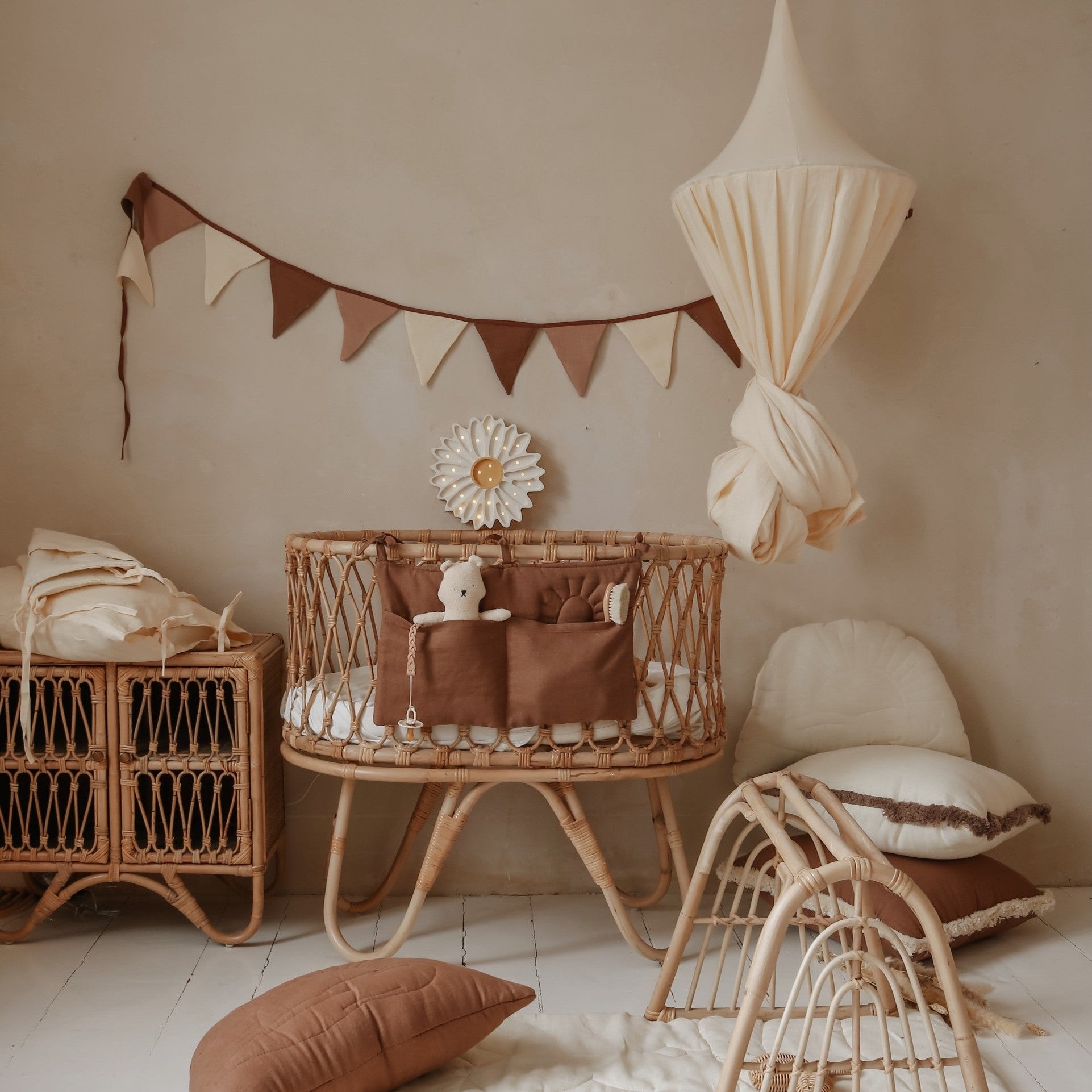
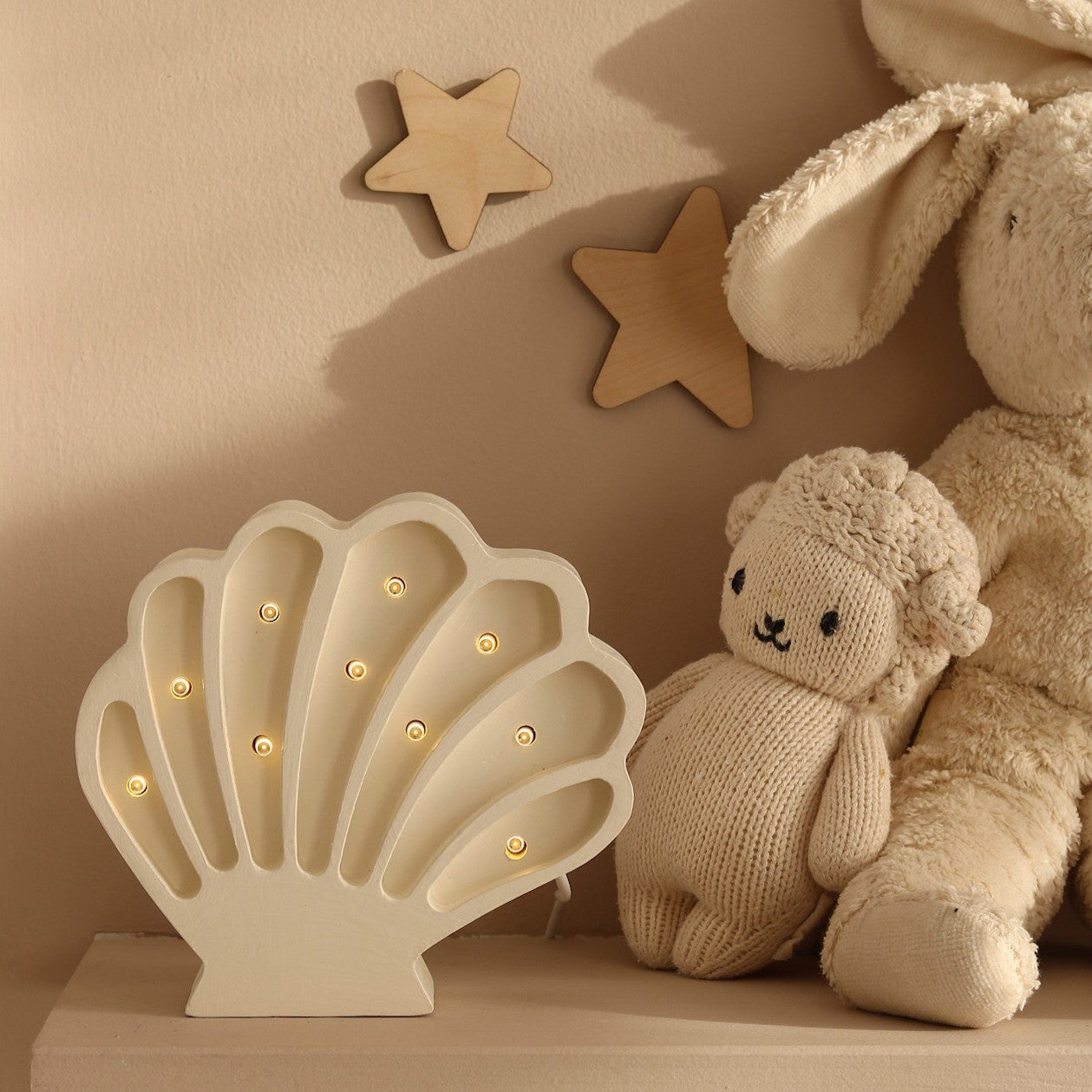
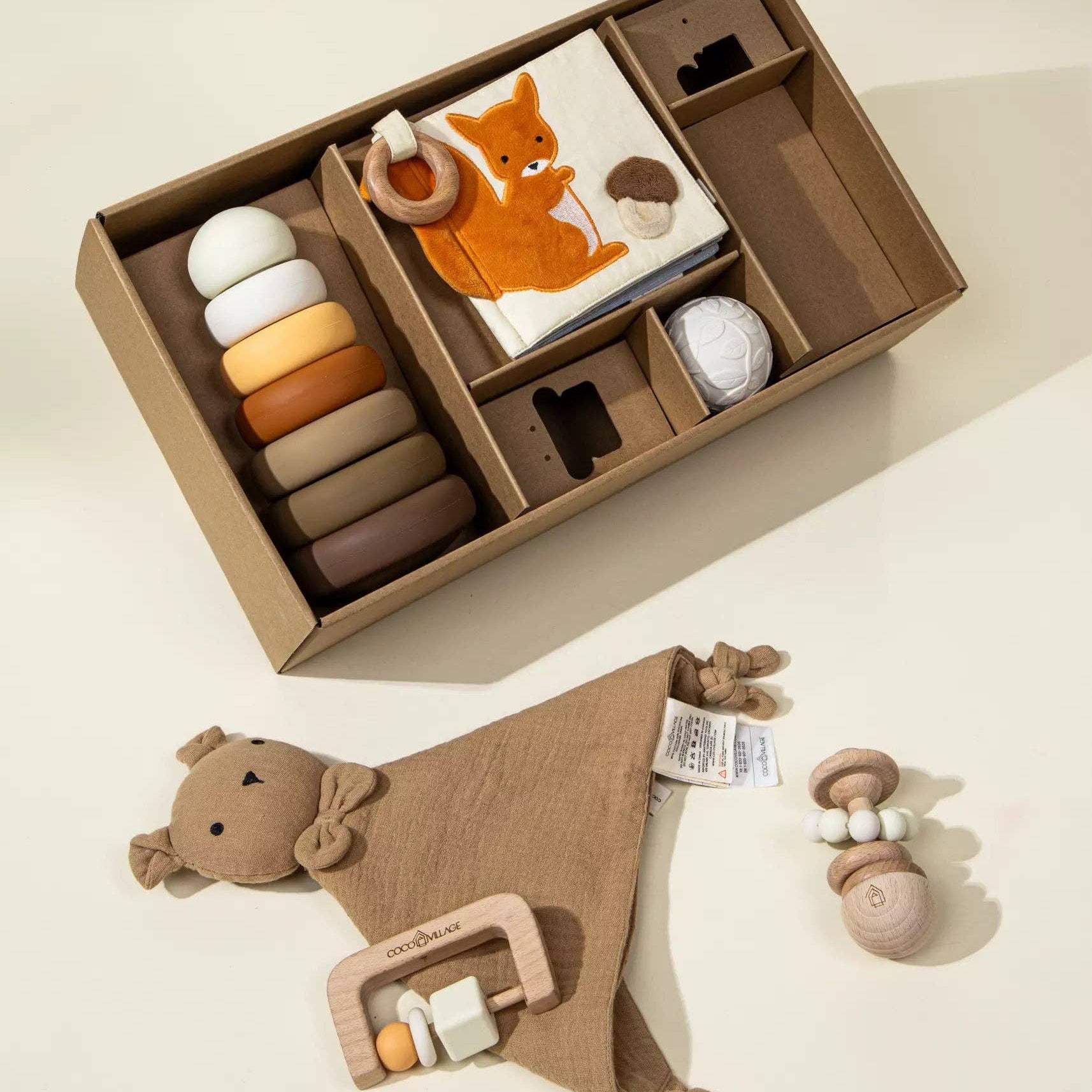
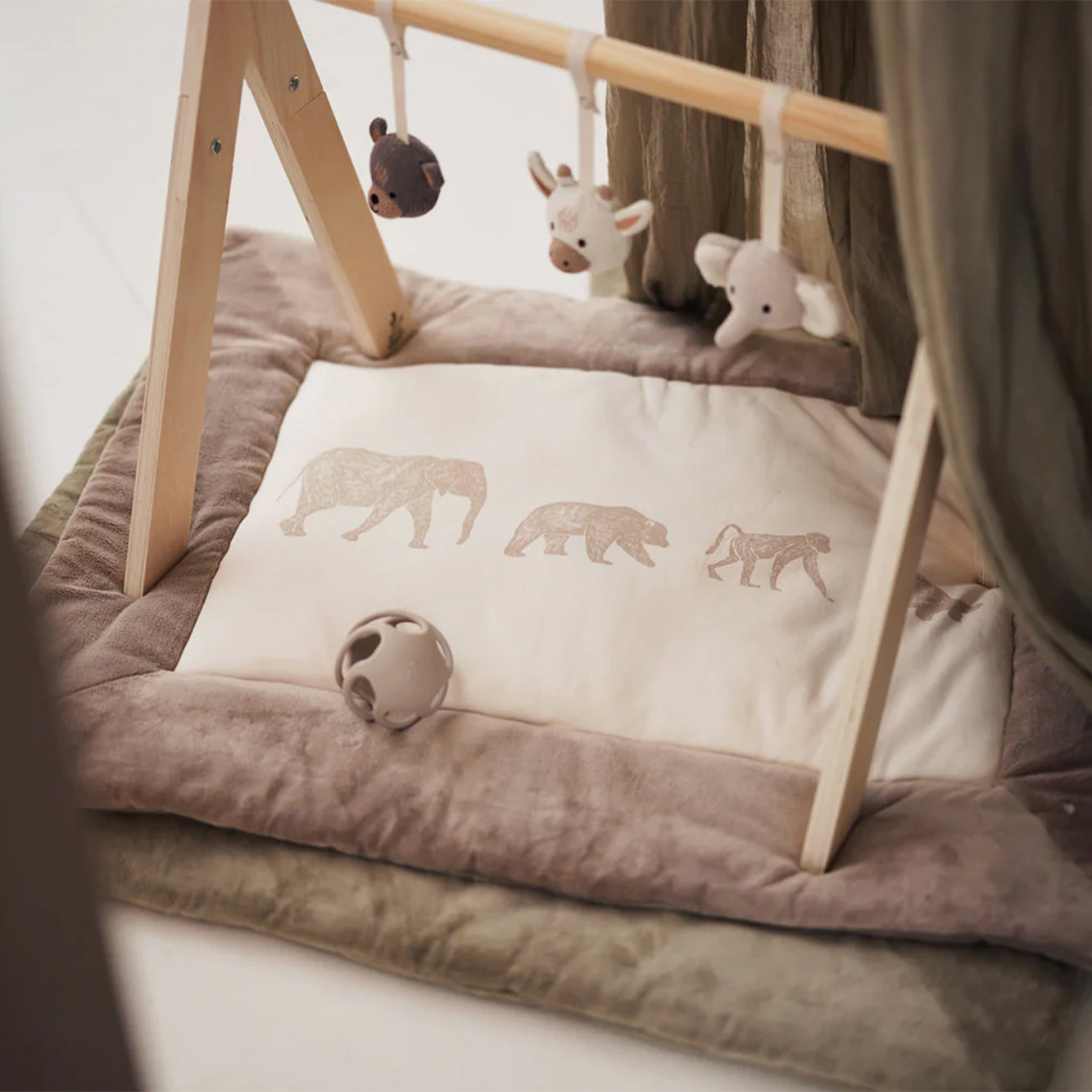
A baby gym with a wooden arch hangs toys right within reach, allowing your child to learn to aim and grasp while lying on their back. It is ideal motor skills toy for the first few months. A wooden teething ring or a soft rattle trains grip and hand-eye coordination, and provides immediate feedback with a soft sound. Montessori toys around 6 months It can be a bit more challenging: a first set of stacking rings or a simple grasping toy that your child can spin around. Soft toys made of natural fabric provide comfort and gentle sensory stimulation.
What to look out for
- Keep it calm. A baby gets overstimulated faster than you think; better a few things than a full rack.
- Everything goes in the mouth. Choose toys that are intended for this and watch out for loose parts.
- Light enough to hold on your own. A block that is too heavy hinders practicing the grip.
- Place toys just out of reach during tummy time. This encourages reaching, rolling, and initial movement.
Montessori toys 1 to 2 years
This is the year of movement and cause and effect. Your toddler is getting up, starting to walk, and wants to know what happens when he does something.
What your toddler practices
Gross motor skills: standing up, walking, carrying. Fine motor skills: stacking, fitting together, taking things in and out. And the realization that "if I do this, that happens." That is why a ball rolling away is endlessly fascinating.
Motor skills this year
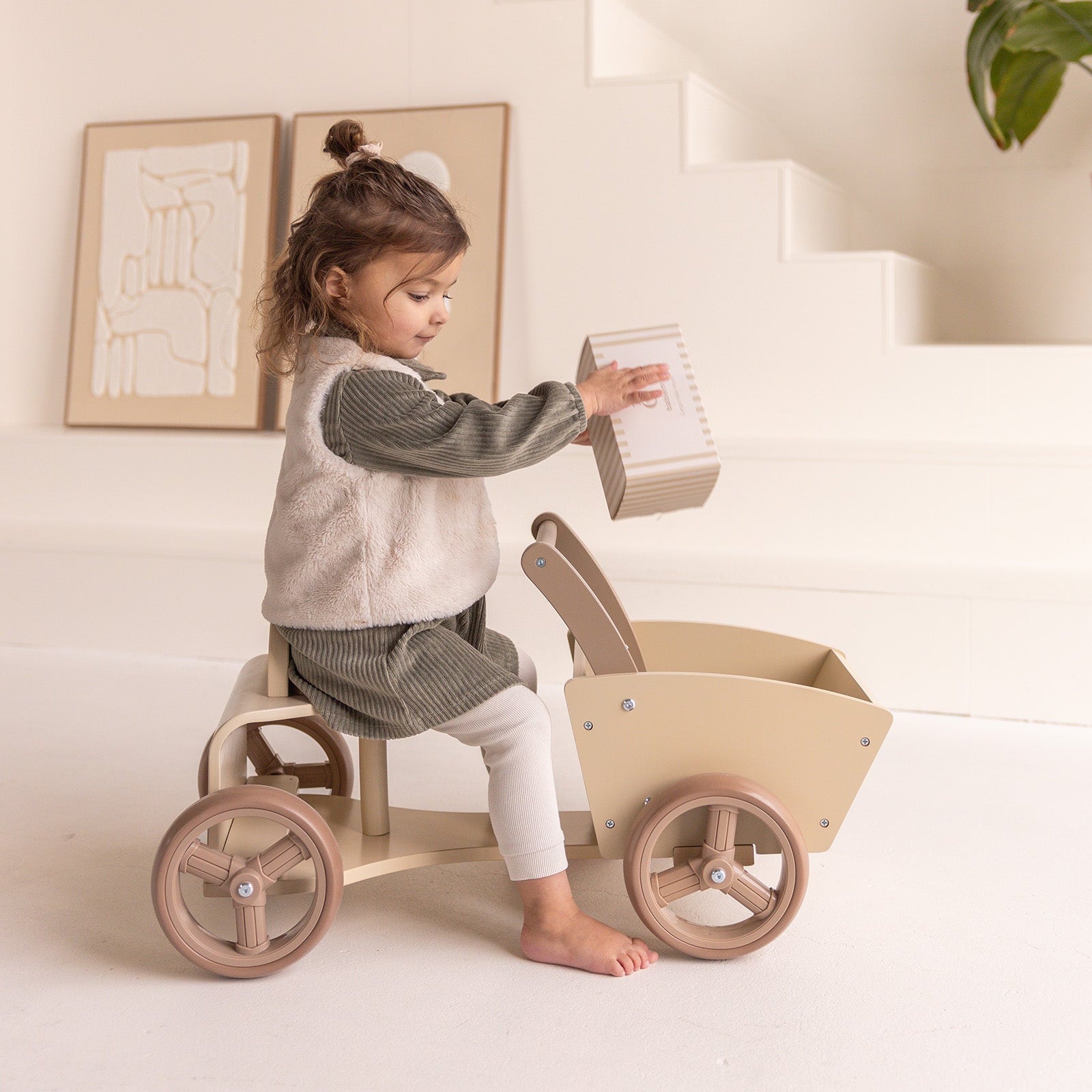
Gross motor skills make a huge leap: from pulling themselves up on the sofa and cruising along the furniture, to their first independent steps and eventually walking on their own. Push toys with a low center of gravity provide just that little bit of stability. Fine motor skills teach your child not only to grasp but also to consciously let go, and that is harder than it sounds. Placing something precisely on top of another block or sliding a ring over a pole requires control that wasn't there a year earlier. Every knocked-over tower is essentially a motor skills exercise: grasp, aim, place, let go, and start again.
What fits and why
Stacking cups and wooden blocks are ideal: your child stacks, knocks everything over, and starts again, thus practicing the cycle of grasping, placing, and releasing. A shape sorter is self-correcting and trains both shape recognition and fine motor skills. A simple wooden car track or a pull-along toy, such as the Babiem pull-along animals in our collection, links movement to play. Push toys provide support during those first steps. And here you see the very first role-play emerging: giving a cuddly toy a kiss, "eating" a block. A beautiful harbinger of the kitchen phase.
What to look out for
- Sturdiness wins. In this phase, toys go through the air and against the wall.
- Not too much at once. A set of five blocks is more manageable than a bin of fifty.
- Choose an open-ended toy. Blocks and cups remain usable for years; a toy with a button becomes boring after a week.
- Give them room to move. A child who has just started walking benefits more from a clear floor and something to push.
Montessori toys 2 to 3 years
Around the age of two, your child becomes more goal-oriented. Sorting, matching, and experimenting become fun, and physically, it is about balance and climbing.
What your child practices
Learning categories: color with color, shape with shape. Concentration that lasts just a little longer. And a big leap in gross motor skills: balancing, climbing, jumping, daring. Meanwhile, fine motor skills become more precise, making placing and sorting puzzle pieces suddenly achievable.
What fits and why
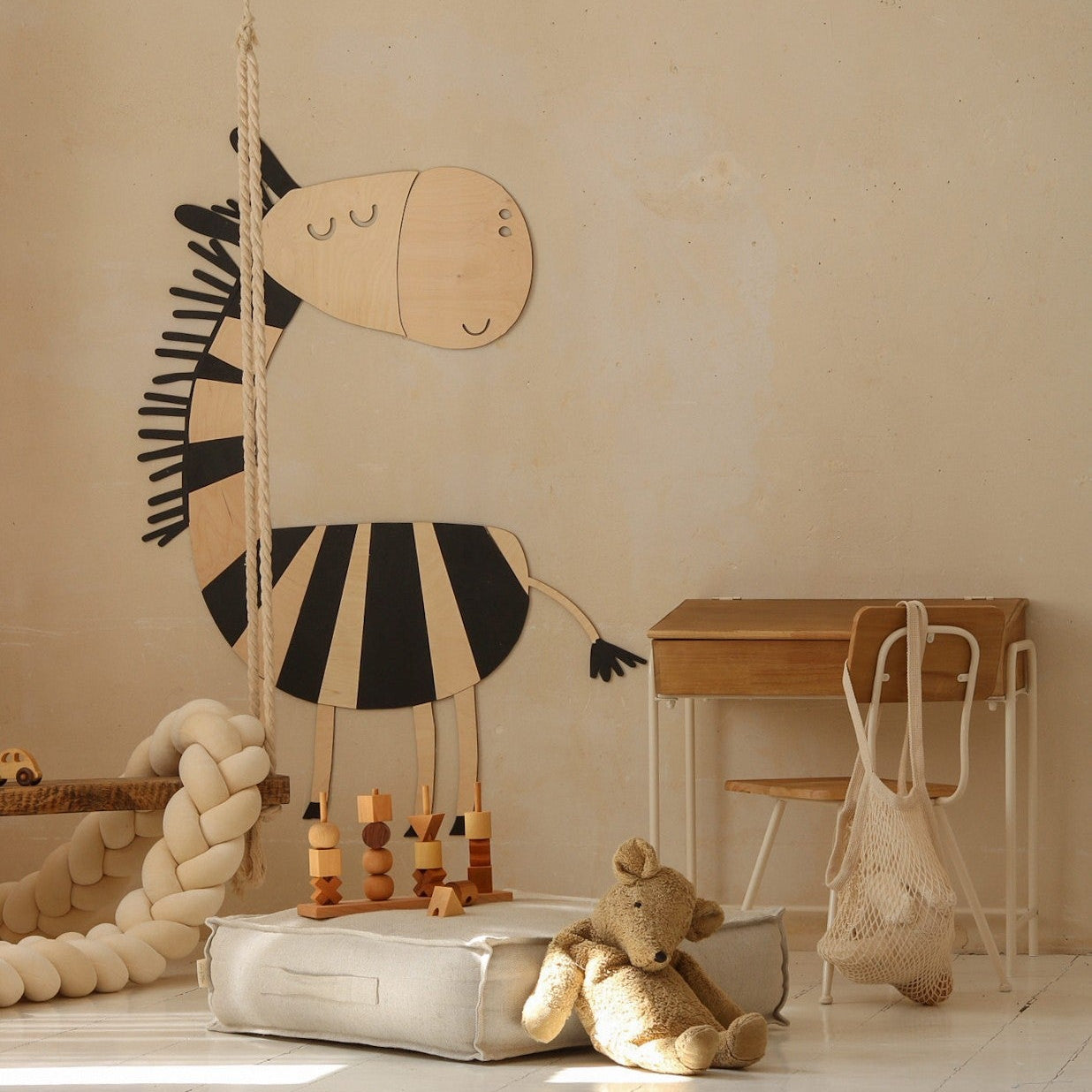
Sorting and inlay puzzles are self-correcting and give your child the satisfying feeling of "I solved it myself". For the motor skills aspect, balance stepping stones Highly recommended. Your child steps from stone to stone, practices balance and builds confidence, and you can set up the route differently every time. Our wooden balance stepping stones from Coco Village are a good example of this; see our for more. climbing and play products For indoors and outdoors. A MeowBaby ball pit fits in perfectly here too: climbing in and out, grabbing and throwing balls trains both gross and fine motor skills. If you are unsure about the size, age, or number of balls, read our guide on buying a ball pit and what to look out for.
What to look out for
- Let your child do it themselves. When sorting and puzzling, a little frustration is actually useful.
- Safely challenge motor skills. Climbing and balance equipment may be exciting, but on a soft surface.
- Rotate instead of buying new. Putting something away for a week and then bringing it out feels like new.
Montessori toys 3 to 4 years
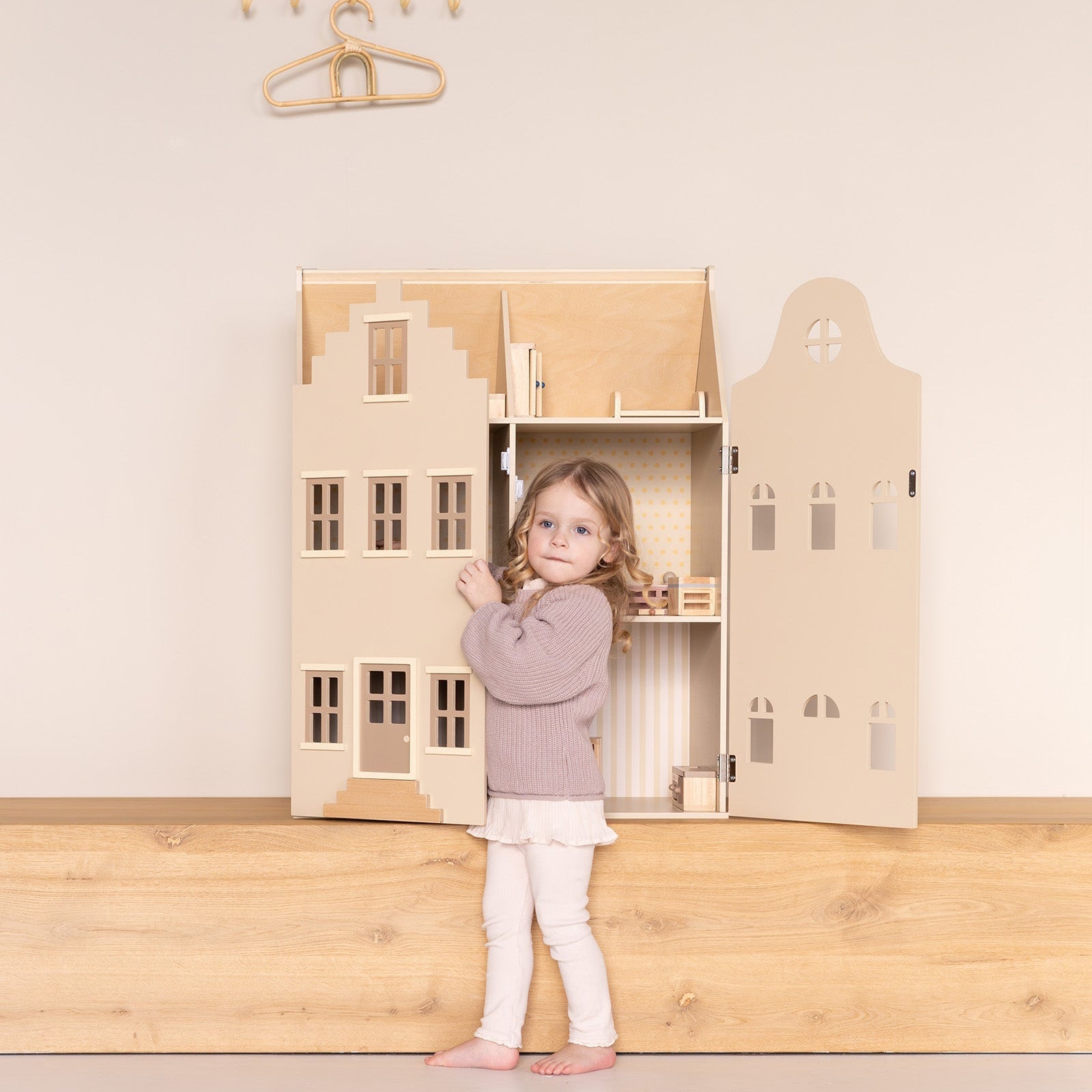
Now comes rich imaginative play. Your preschooler acts out scenarios, talks incessantly, and plays together more and more often. This is the role-playing phase.
What your preschooler practices
Language and story: telling, naming, playing a role. Social skills: taking turns, building something together, playing customer and salesperson. And longer concentration, because a game can now last half an hour. Fine motor skills become more refined: cutting vegetables with Velcro, handling small pans, and later the first pen strokes.
What fits and why
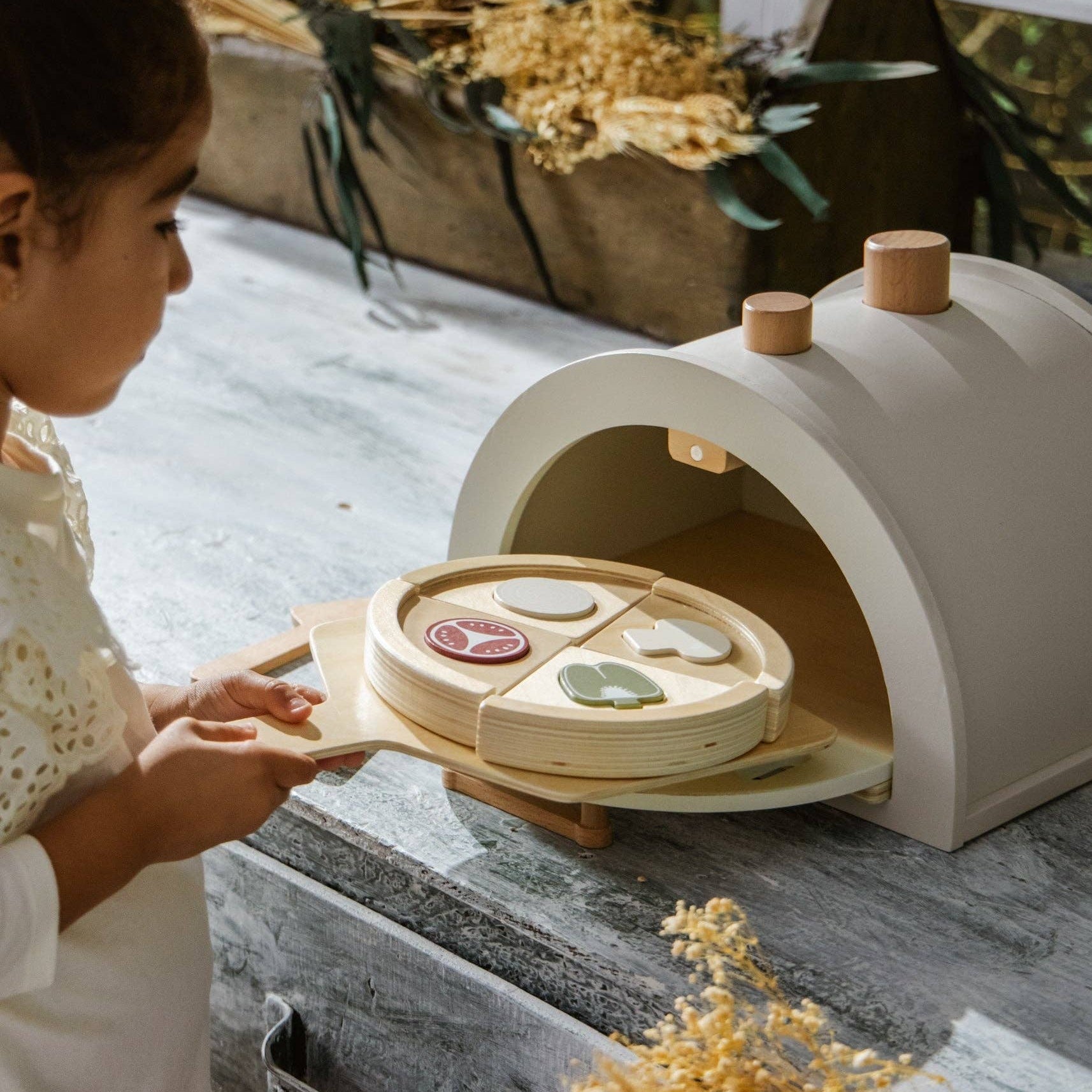
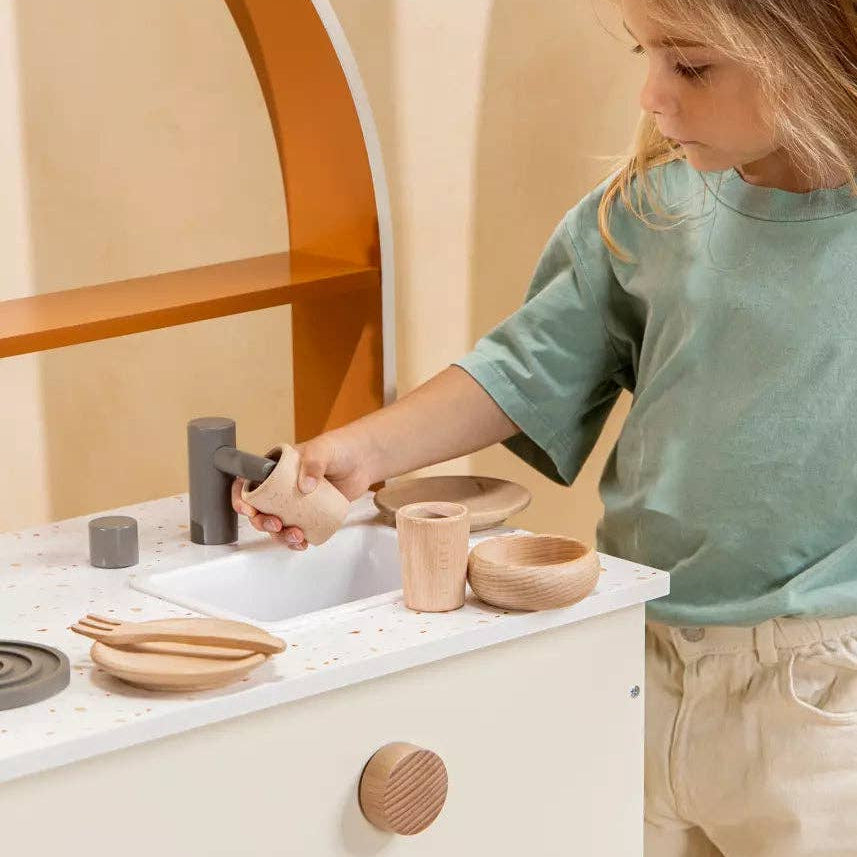
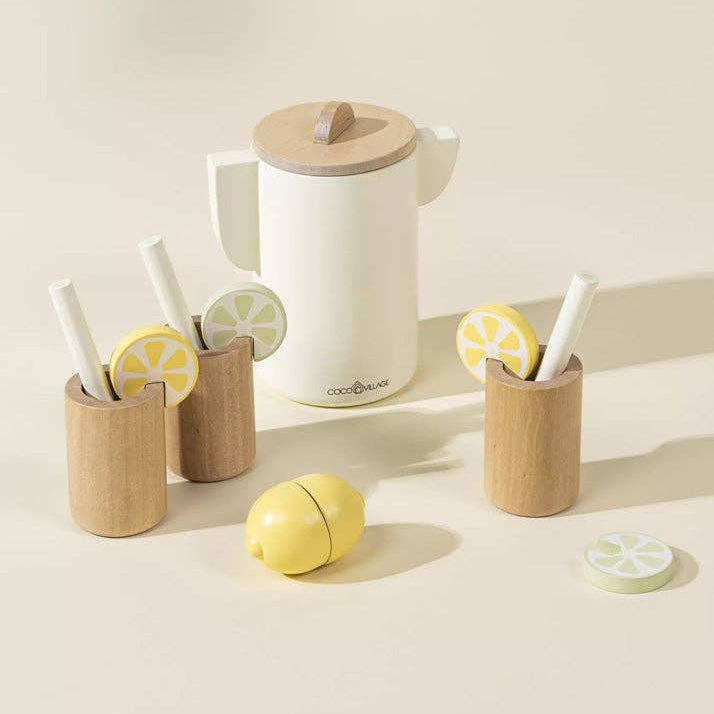
A wooden play kitchen is worth its weight in gold at this stage. Your child cooks, sets the table, serves, and practices language and social roles in the process. You can expand with a market or vegetable set, or an ice cream stand where the whole family comes to buy "ice creams." A tool set appeals to children who prefer tinkering to cooking and provides extra training for fine motor skills. The beauty of this is that it is all open-ended: there is no right or wrong, only the story your child invents. If you want to choose a specific play kitchen, read our guide on Choosing a wooden children's kitchen and what to look for.
What to look out for
- Start small and build from there. First the basics, then add a set.
- Real objects often work best. A small wooden pan does more than ten plastic accessories.
- Space matters. Role-play toys need a designated place.
Quick selection: overview by age
A short cheat sheet:
- 0 to 1 year: Baby gym, teething ring, first stacking rings, soft stuffed animals. Focus on looking, reaching, and grasping, plus tummy time.
- 1 to 2 years: stacking cups, blocks, shape sorter, car track, pull-along toy, push toys. Focus on walking, placing, and letting go.
- 2 to 3 years: Sorting and inlay puzzles, balance stepping stones, climbing and play products, ball pit. Focus on sorting, balance, and climbing.
- 3 to 4 years: Wooden play kitchen with sets, tool set. Focus on role-play and language.
What to look out for (and what is overrated)
Choose by phase, not by the label. "Montessori" on the box says little in itself. Check the features: natural material, a clear goal, self-correcting, open-ended. A simple set of wooden blocks without a label often meets these criteria better than an expensive toy with the right word on it.
You rarely need to buy specialized motor skills toys separately. Many online shops put "motor skills" as a separate label on expensive toys, but in practice, almost all good toys from the phases mentioned above already train motor skills. Blocks, stacking rings, a shape sorter, and stepping stones do exactly what an expensive motor skills board does: grasping, placing, balancing, and repeating.
Less is more. A child plays with more concentration with eight good things than with forty. What works is a small selection, and bringing back toys that have been gone for a few weeks. That feels like new, without buying anything.
Safety and equipment. For the youngest ages, pay attention to loose parts and the finish: smooth edges, saliva- and bite-resistant paint, and sturdy seams on textiles. Neatly finished wood lasts for years and can often be passed on to a second child. Finally, regarding delivery: our assortment comes from various sources, so the delivery time varies per product and is listed per item.
Buy Montessori toys at WoodyKids
If you want to look specifically, you can shop with us by phase. For the youngest phases and everything with natural materials, start at wooden toysIf you are looking for something broader, from stuffed animals to play tents and ball pits, take a look at our toy collectionAnd for the movers aged two to four, you will find balancing and climbing at our climbing and play productsIf in doubt, think back to the phase question: what is my child practicing now, and does this toy fit just above that? Then you will almost always make the right choice.
Frequently Asked Questions
From what age are Montessori toys suitable?
From birth, provided you tailor it to the stage. For a newborn, that means gentle sensory stimuli and simple grasping toys, no complicated puzzles. The core remains the same: natural materials, a clear goal, and room to explore on their own.
Which Montessori toys are suitable for a baby aged 0 to 1 year?
In the first year, your baby mainly practices looking and grasping. A baby gym with a wooden arch, a teething ring, first stacking rings, and soft stuffed animals complement this well. Around six months, you can make things a little more challenging, such as a grasping toy that your child can spin around.
Which toys stimulate a baby's motor skills?
For fine motor skills, anything your baby can reach for and grasp works: a baby gym with toys within reach, a wooden teething ring, and a light rattle. For gross motor skills, tummy time is most valuable, possibly with an engaging object just out of reach. You rarely need special motor skills toys: good grasping and stacking toys do that automatically.
Which Montessori toys do you choose for a 3 to 4-year-old preschooler?
This is the golden age of role-playing. A wooden play kitchen with a market, vegetable, or ice cream stall set, or a tool set, nourishes imagination and language. Start small and expand as soon as the game sticks.
How much Montessori toys does a child need?
Less than you think. A small, well-thought-out selection of around eight to ten toys often works better than a cluttered play area: your child plays with more concentration. Rotate by putting something away for a few weeks and bringing it back later; it feels like new.