

Wooden or plastic toys: what do you choose?
The choice between wooden or plastic toys often feels charged, as if a purchase reveals what kind of parent you are. That doesn't have to be the case. Both can be good, provided they meet European safety standards. We objectively compare the differences between wooden and plastic toys, debunk the myth that wood is by definition chemical-free, and provide a practical guide to help you choose based on the play occasion and the child's age. For more in-depth information on toys that last for years, we refer you to our pillar. wooden toys that grow with you.
The short answer
Both can be safe and good. Wood and plastic in European shops must comply with the same strict toy directive. The material therefore says little about safety and everything about the type of play.
Wood is often the better choice for quiet, repetitive, and imaginative play: blocks, a play kitchen, balance exercises. It feels sturdier in the hand and lasts a long time. Plastic is more practical if you need something that can withstand water, sand, or a car ride, that is lightweight for small hands, or that provides stimulation with sound and light. So, do not choose based on your gut feeling, but on what the child will do with it.
Wooden or plastic toys compared on 5 points
Below, we rank wooden or plastic toys based on the five points parents consider most often, without a predetermined winner.
Sustainability and environment
Wood is a renewable resource and, in responsibly managed forests (think of the FSC label), a friendlier starting point than new plastic derived from petroleum. However, it is not black and white. A wooden toy that ends up in the landfill after a month is more environmentally damaging than a plastic toy that lasts for three children. The environmental impact lies at least as much in the lifespan as in the raw material itself.
Safety and chemistry
Within the EU, limit values for harmful substances, sharp edges, and small loose parts apply to both materials. Good plastic toys are therefore not unsafe, and wood is not automatically pure. Further on, we will delve deeper into wooden toys and chemical substances, as that is where the biggest misunderstandings lie.
Play and development
Wooden toys often leave more to the imagination. A wooden plate becomes a pancake today and a steering wheel tomorrow. Plastic is more often detailed and sometimes does the work itself with lights or sound. Both have value, just at different times.
Price and value
Good wooden toys usually cost more per piece than a comparable plastic toy. You recoup that higher price if they last a long time and you can pass them on or sell them second-hand after the first child. So, don't calculate the purchase price, but the price per year of enjoyment.
Lifespan and reuse
Solid wooden toys can take a good knock and often last for years, sometimes across multiple children. Plastic can also last a long time, but it discolors faster in the sun and is more likely to break at a weak point, such as a hinge. When it comes to lifespan, how sturdily something is made is what matters most.
Not all plastic is the same.
Plastic is often lumped together, but there is a significant difference between one plastic toy and another. Those who make a conscious choice pay attention to the type of plastic and how it is made, not the word plastic.
Look for the BPA-free designation. BPA (bisphenol A) is a substance that used to be found in many hard plastics. For toys that go in the mouth, such as teething rings and baby toys, being BPA-free is a welcome extra assurance on top of European requirements. Many good brands mention it explicitly.
There is also increasingly more recycled plastic on the market: toys that are (partly) made from reused synthetic material instead of new petroleum-based plastic. This saves raw materials and is a good compromise for something that needs to withstand water and outdoor play. Simple plastic construction (without glued-in electronics or batteries) is also easier to recycle in the long run than a toy made from ten different materials.
The core remains honest: plastic is not the bogeyman, and wood is not automatically the holy grail. A well-chosen, BPA-free, or recycled plastic toy that lasts a long time is a great choice.
Is wooden toy really safer than plastic?
Herein lies the biggest myth. Many parents think: wood is natural, therefore chemical-free and thus safer. That is not simply true. Whether wooden toys are safer does not depend on the material, but on how they are made and finished.
After all, wood is often glued, painted, and varnished. With cheap or uncertified imports, the glue and varnish may contain substances that you would rather not have in a child's mouth. A bare, untreated piece of solid wood is fine, but as soon as it has color, the quality of the finish counts.
What the EU requirements state is reassuring: all toys sold here, whether wood or plastic, must comply with the Toy Safety Directive and bear the CE mark. This sets limit values for heavy metals, plasticizers, and other substances. Both a certified plastic and a certified wooden toy have been tested.
So, what you should pay attention to is not wood versus plastic, but the origin and the finish. Buy from a seller who displays the CE mark and age statement, choose water-based paint and varnish and BPA-free plastic, and be critical of suspiciously cheap toys without clear information. That applies to both materials.
What is better for development?
Here too, there is no fixed answer, but there are a few differences. Toys that do little on their own demand more from the child. That is the power of open-ended toys, and we delve deeper into this in our pillar on wooden toys that grow with you.
Wooden blocks, a play kitchen, or a stacking tower do not produce lights or sounds. The child invents the story, the words, and the sounds themselves. This trains imagination, language, and concentration. Plastic with sound and light provides a stronger stimulus but offers less room for personal interpretation.
Weight plays a role in motor skills. Wooden toys feel somewhat heavier in the hand, which helps a child feel their own strength and movement. Think of stepping stones, where every step requires coordination with the body. If you want to know which toys suit which phase, take a look at Montessori toys by age.
Choose at the moment of play, not by the label
The easiest decision model is not wood or plastic, but: where and how will this be used?
- Bath, beach, car and traveling. Plastic often wins here. It can withstand water and sand, dries quickly, and does not warp. It is better to keep wooden toys dry and indoors.
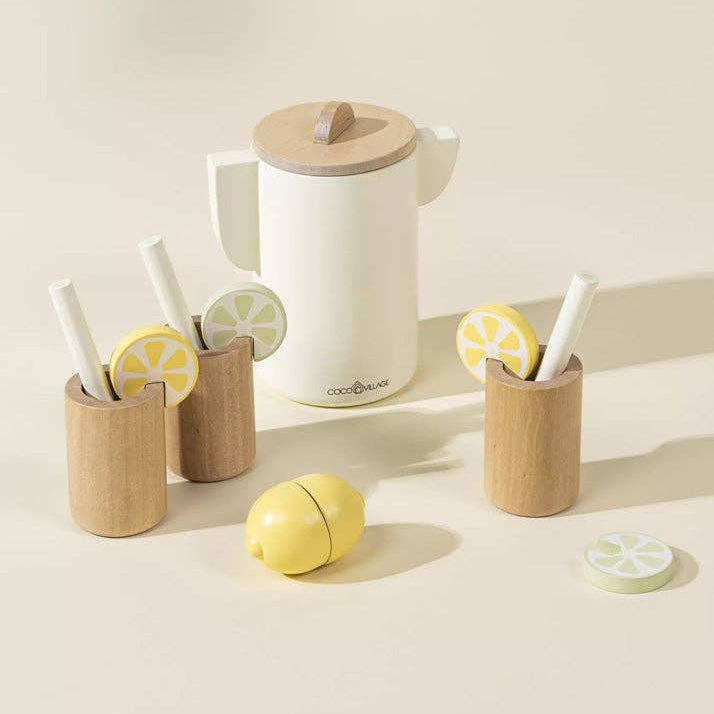
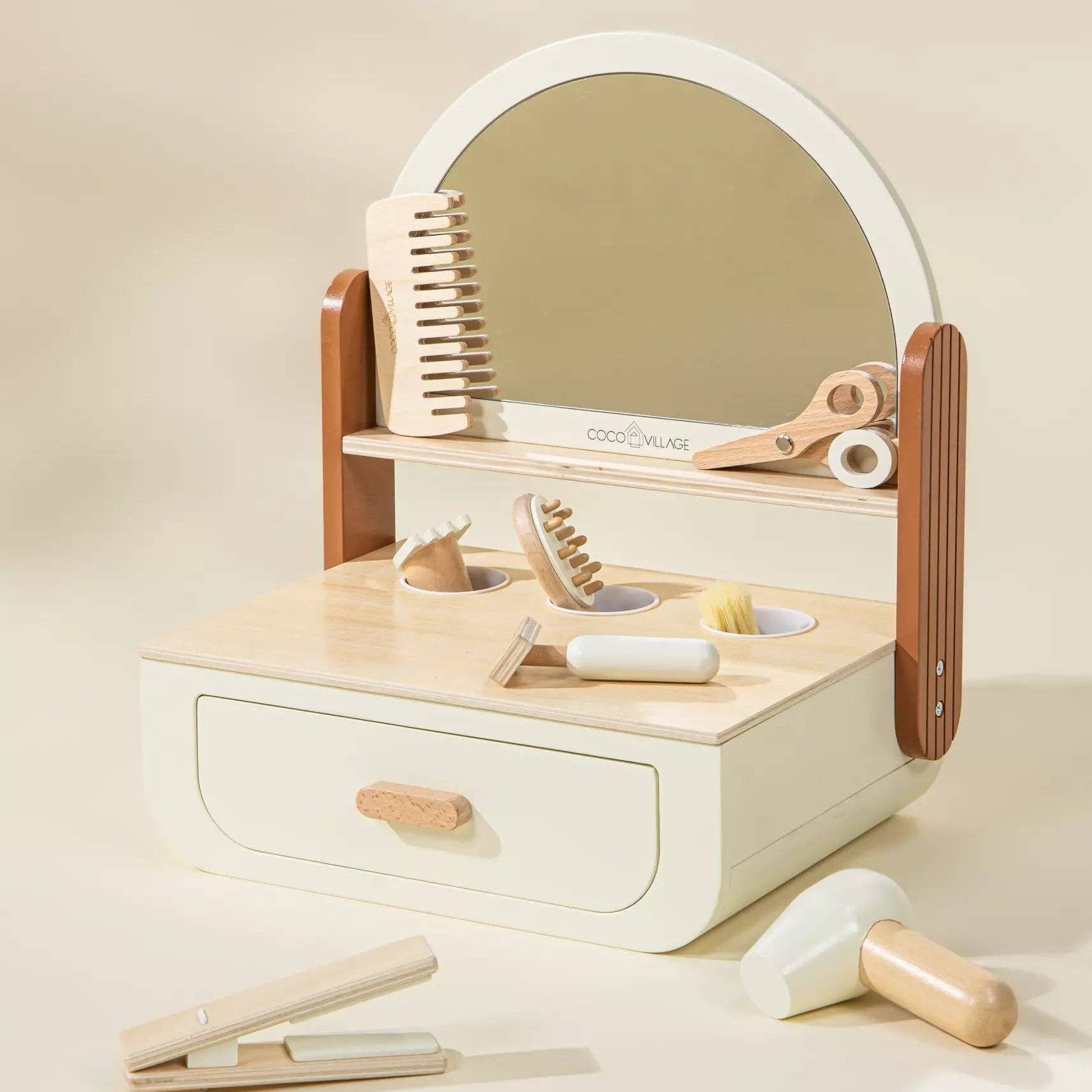
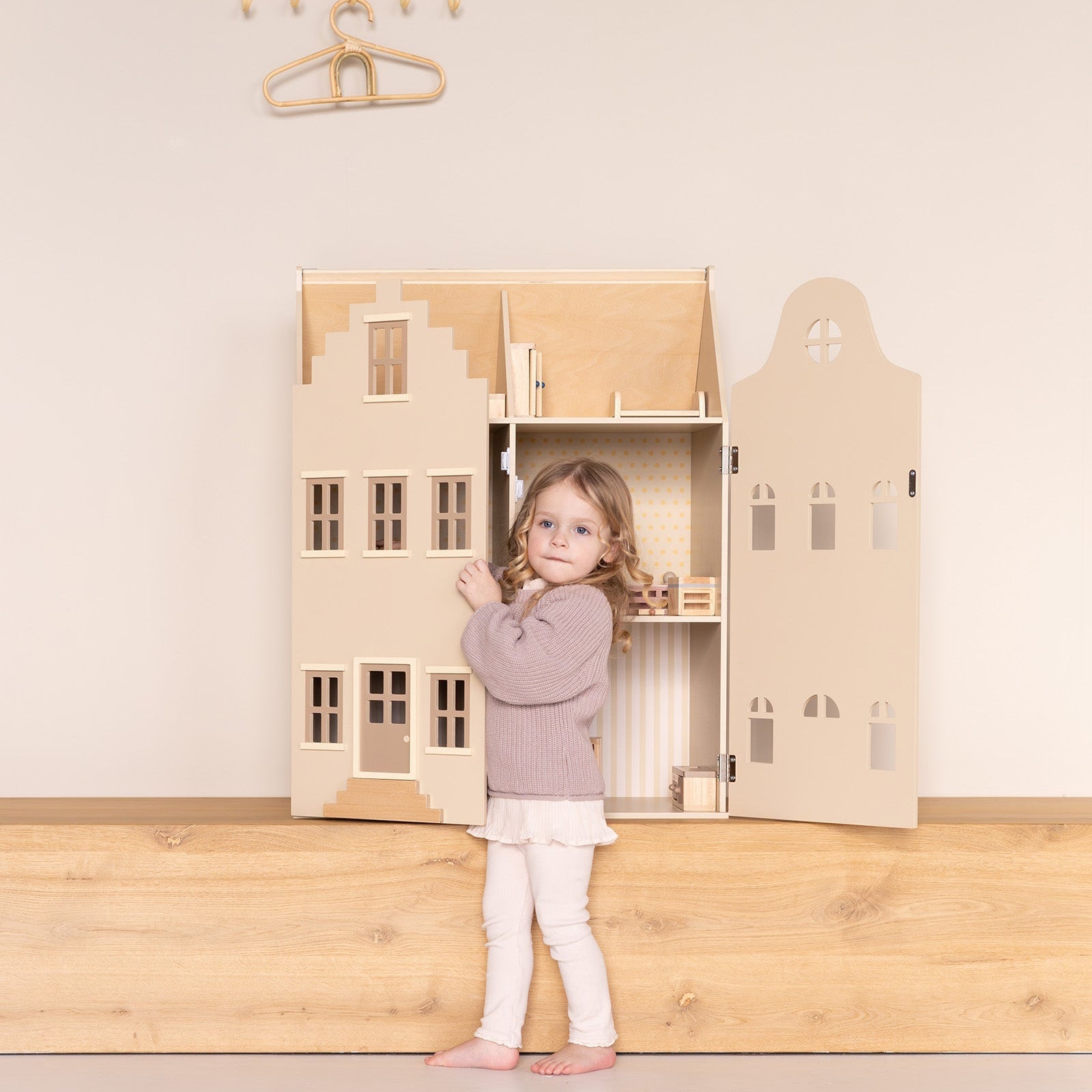
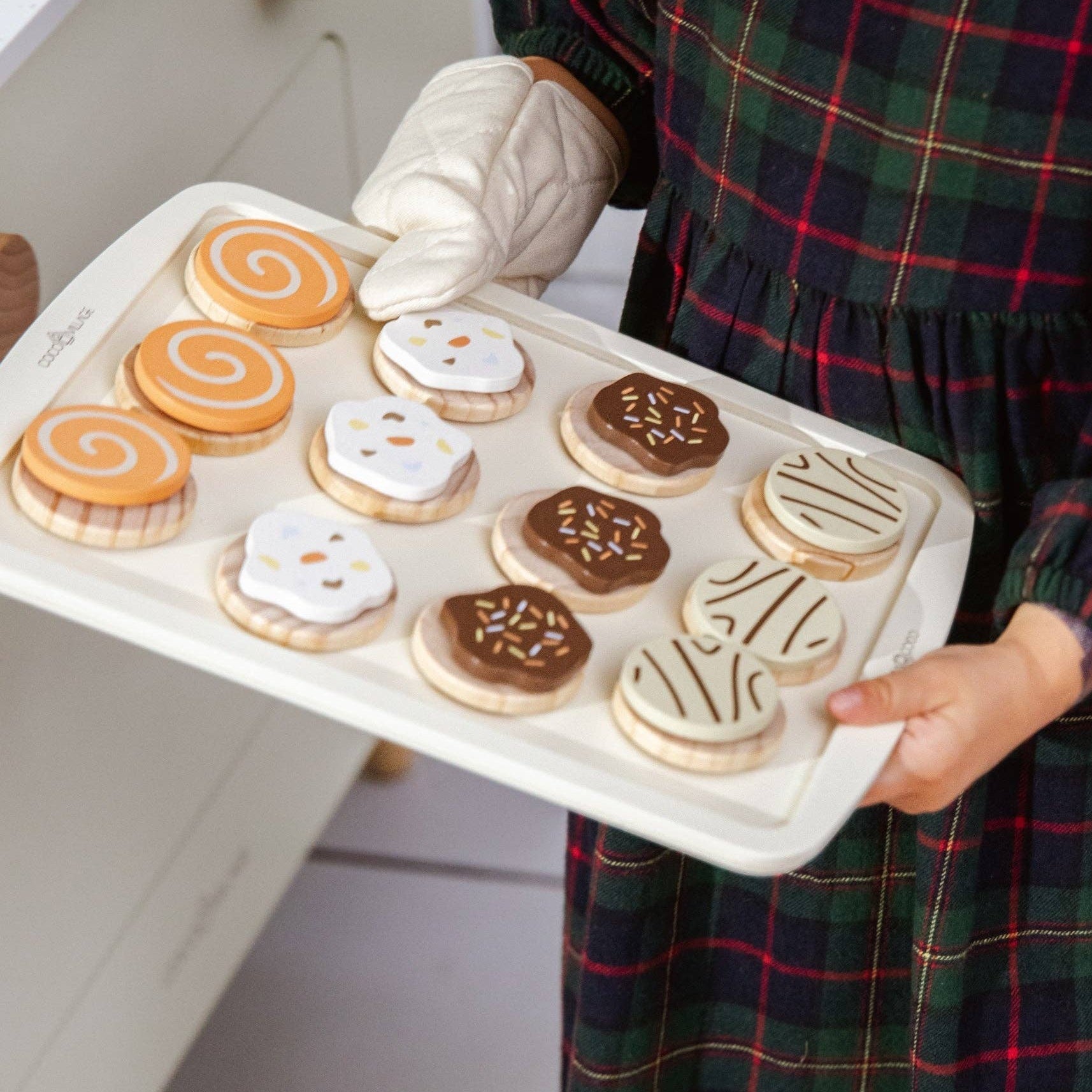
- At the table and in the kitchenette. Wood is wonderful for role-playing. A wooden play kitchen, market set, or tool set invites you to cook, build, and pretend.
- In a baby's mouth. Choose wisely: plain or untreated wood, or plastic that is intended, certified, and BPA-free for teething toys. Avoid painted wooden toys with small parts for the very little ones.
This general guideline helps by age. For 0 to 1 year, the focus is on safe, easy-to-clean, and grippable items: sturdy plastic or plain wood without loose parts. At 1 to 2 years, stacking, pushing, and pulling begin, which are complemented by wooden blocks and pull-along figures. From 2 to 4 years, role-playing explodes, and wooden kitchen, market, and tool toys shine.
In summary: when do you choose what?
To make it clear, here is the assessment in a few lines. Choose the situation that is closest to yours.
- Quiet indoor play and role-play: Choose wood. A kitchen, blocks, or a market set invite imagination and last for years.
- Water, sand and on the way: Choose plastic, preferably BPA-free. It can withstand a wet suit and a bag full of sand without warping.
- A baby who puts everything in their mouth: Choose plain, untreated wood or BPA-free plastic certified as a teething toy, without small loose parts.
- Lasting a long time and passing it on: Choose sturdy solid wood, or plastic known for its robustness. The material matters less than the build quality.
- With the environment in mind: Choose FSC wood that you pass on later, or recycled plastic that you hand in separately. Lifespan is the most important factor.
- A conscious stimulus (sound or light): In that case, plastic with technology is sometimes quite suitable, provided it is certified. Alternate it with quiet, open toys.
Wooden toys at WoodyKids: examples
At WoodyKids, the emphasis is on sturdy, beautifully finished wooden toys that invite pretend play and last for years. A few examples.
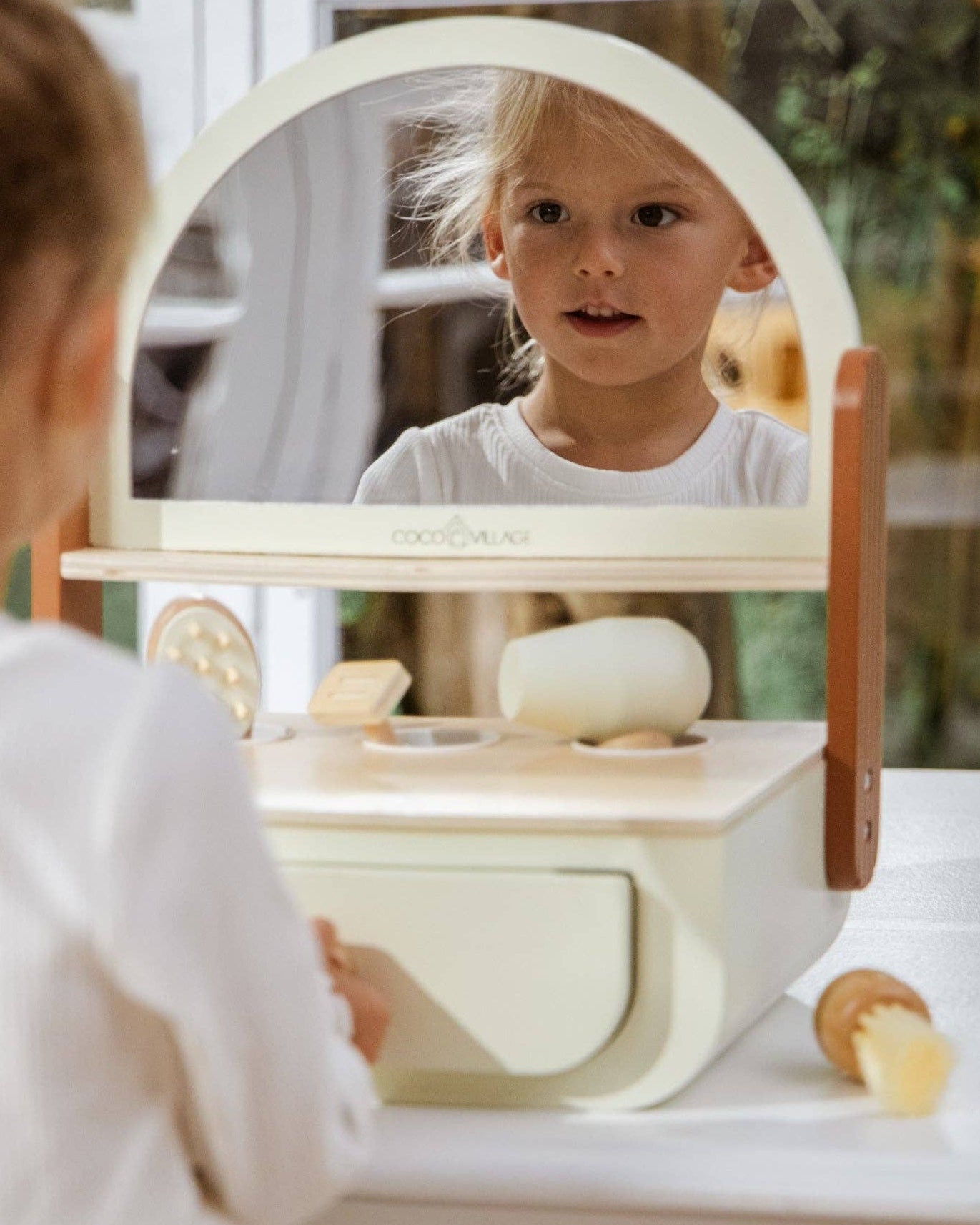
For the kitchen corner, we have complete wooden children's kitchens, plus separate pieces that expand the game: a pizza oven, a barbecue, and an ice cream stand. This shifts the game from simply stirring to running a whole little restaurant. If you would like to delve deeper into this selection, read on. Choosing a wooden children's kitchen: what to look for.
Surrounding that, you will find role-playing materials: a wooden tool set and vegetable, fruit, and market sets to cook and sell with. For physical activity, we have balance stepping stones who challenge children to balance and jump.
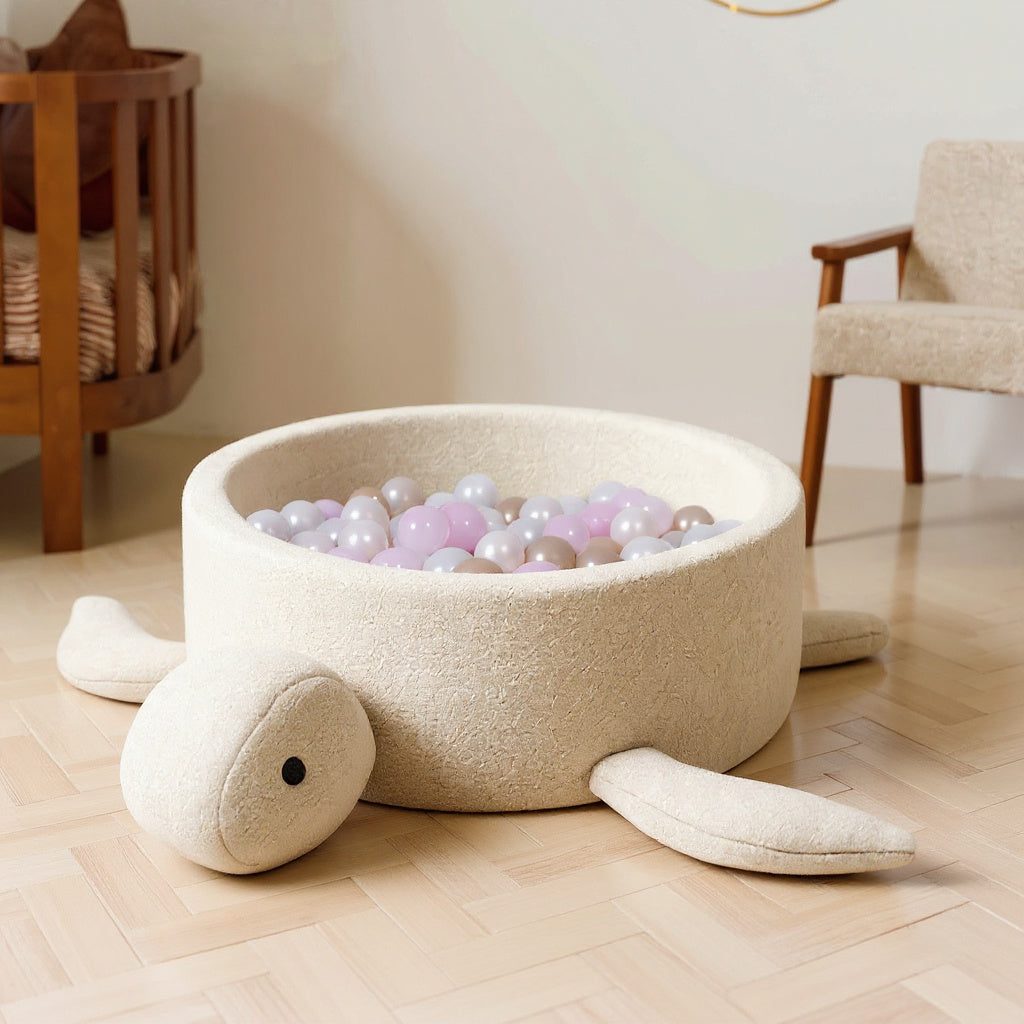
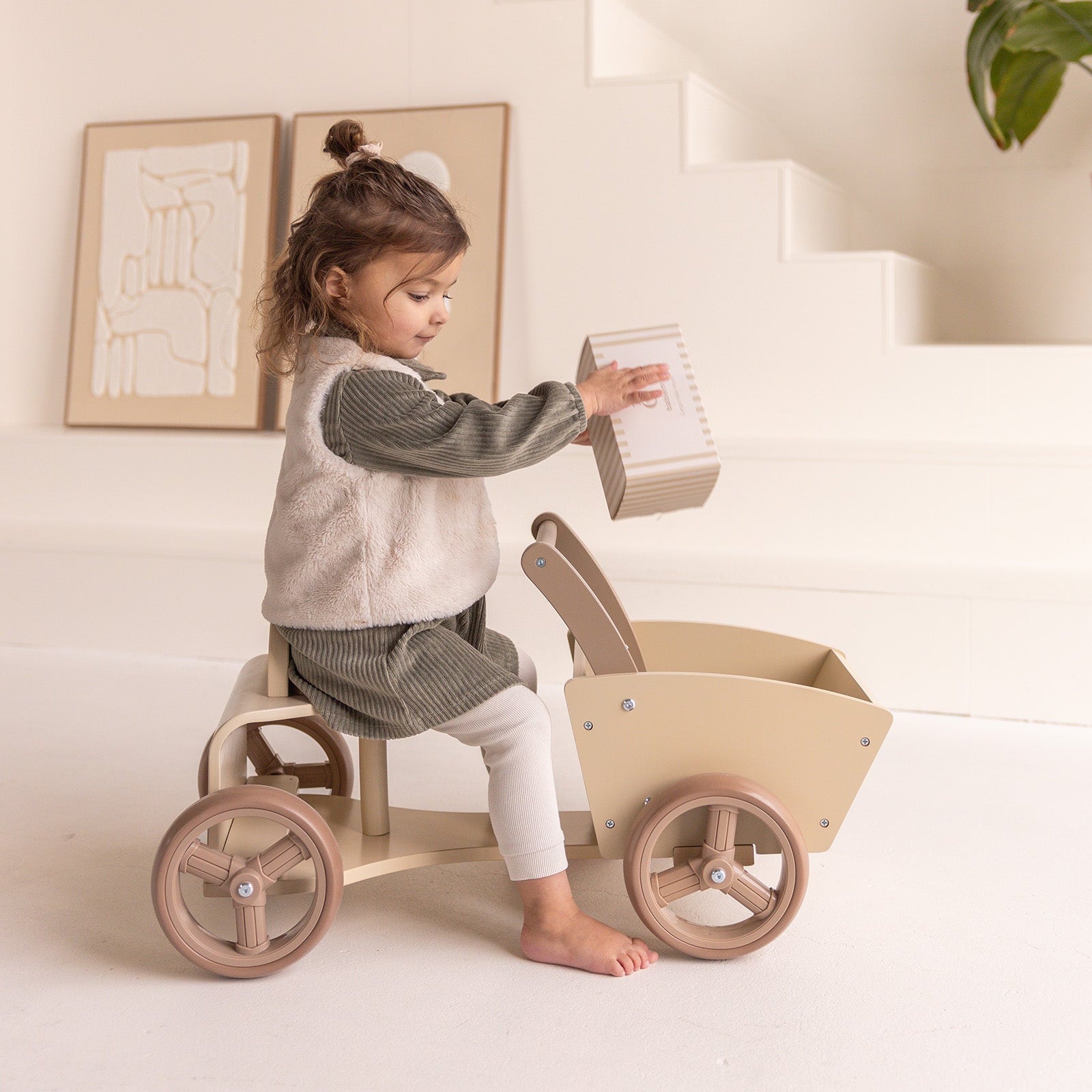
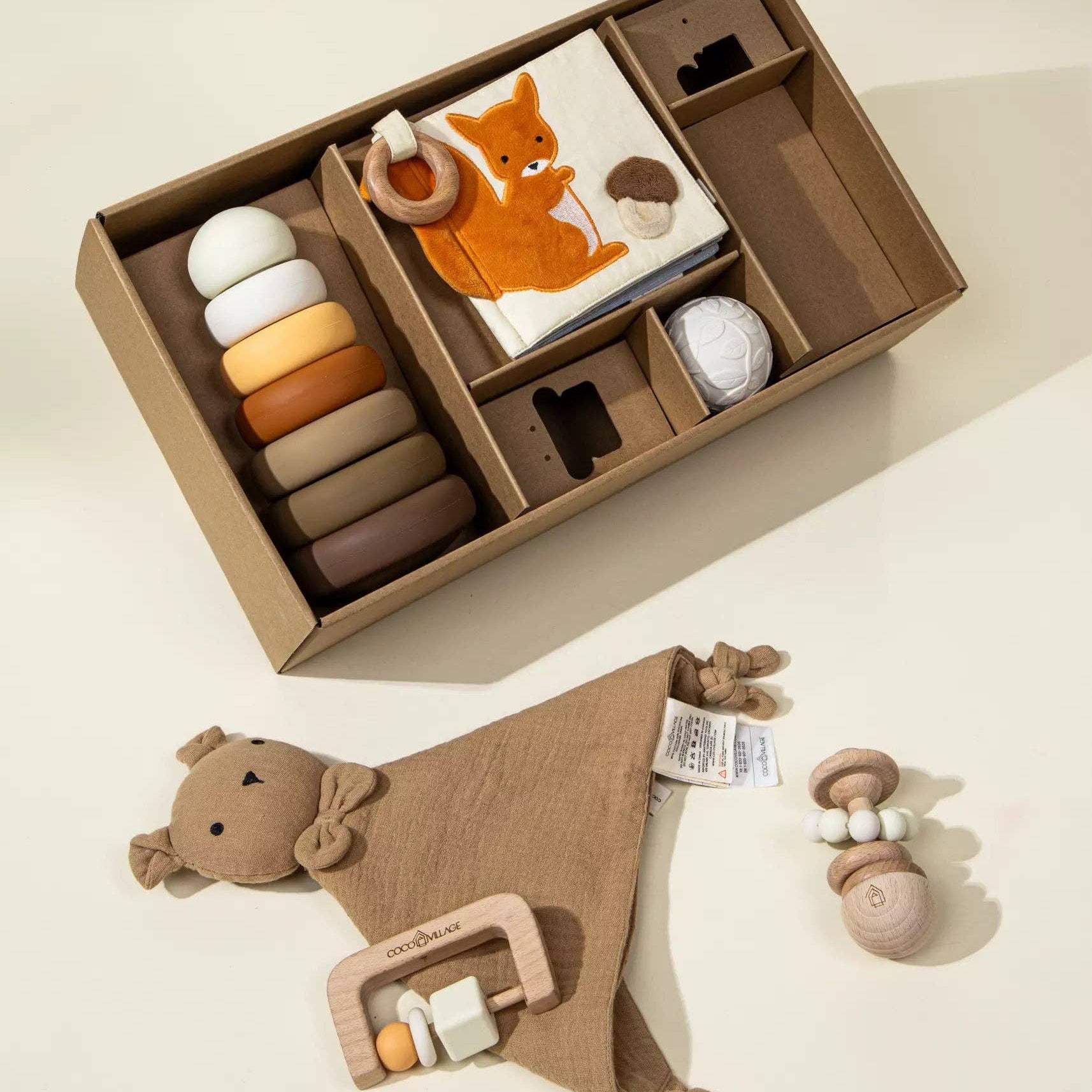
The assortment extends beyond just wood. In addition to wooden toys from brands such as Coco Village, you will find a baby gym and soft toys from Jollein, play tents and pull-along figures from Babiem, and ball pits from MeowBaby. This allows you to combine quiet wooden play with toys that are more suitable for other times. View all our wooden toys or stroll through our toy collection.
What should you look for when buying wooden toys?
If you have chosen wood, the quality makes the difference between something you pass on and something that splinters after a season.
- Solid versus plywood. Solid wood is sturdier and has a nicer finish, but it is heavier and more expensive. Good plywood can be perfectly fine for larger pieces such as a kitchenette, provided the edges are neatly finished.
- Water-based paint and varnish. Choose painted toys finished with water-based varnish or paint. That is the most important point regarding wooden toys and chemicals.
- Quality mark and age. Check whether the CE mark and an age indication are listed. That indication often relates to small parts, not just difficulty.
- FSC or similar. An FSC label shows that the wood comes from responsibly managed forests, which is a nice bonus.
With those four points in hand, you can buy wooden toys you can rest assured of. If you are still unsure, browse through wooden toys and choose the playtime that suits your child.
Frequently Asked Questions
Are wooden toys better than plastic toys?
Not necessarily. Both can be safe and valuable within European requirements. Wood is better suited for quiet, imaginative play, while plastic is more practical near water, on the go, or if you are looking for a lightweight or auditory stimulus. The best choice depends on the play moment and age, not the material.
Is wooden toy safer than plastic?
Not automatically. All toys sold in the EU must comply with the same safety directive and bear the CE mark. Safety lies in the origin and the finish, such as glue and varnish, not in the choice between wood or plastic per se.
Do wooden toys also contain chemical substances?
Yes, that is possible. Wood is often glued, painted, and varnished, and substances can be present in those finishes. With certified toys using water-based paint and varnish, this is not a problem. Be critical of very cheap, uncertified imports.
What does BPA-free plastic toy mean?
BPA-free means that no bisphenol A is incorporated into the plastic, a substance that used to be commonly found in hard plastics. Especially for toys that go in the mouth, such as teething rings and baby toys, this is a welcome extra assurance on top of the European requirements.
Is recycled plastic toy a good choice?
It can be a good middle ground. Recycled plastic is made from reused synthetic material instead of new petroleum-based plastic, which saves raw materials, and is great for toys that need to withstand water and outdoor play. Do ensure that it is certified and, for the youngest children, BPA-free. Just as with wood, lifespan is the most important factor.
Do wooden toys last longer than plastic?
Solid wooden toys often last for years and can take a good knock, which is why you sometimes pass them down among multiple children. Plastic can also last a long time, but it discolors faster in the sun and breaks more easily at the hinges. How sturdily something is made is the most important factor.
Is wooden or plastic toy better for a baby?
For babies, what matters most is that it is safe, easy to clean, and easy to grasp. Choose natural or untreated wood, or plastic that is certified as a teething toy and is BPA-free. Avoid painted wooden toys with small loose parts.
Is wooden toy better for the environment?
Often yes, especially with FSC-certified wood from responsibly managed forests. However, lifespan is at least as important: toys that last a long time and are passed down are more environmentally friendly than something that quickly ends up in the landfill.