


Choosing a wooden children's kitchen: what to look for?
A wooden play kitchen is one of those gifts a child plays with for years. But when you start choosing one, you quickly run into questions. What size fits the room? Where do you put it? From what age is it fun? And what should you look for in terms of safety and quality? In this article, we guide you through the selection process with an honest checklist. By the end, you will know exactly what to look for when buying a wooden play kitchen, whether for your own child or as a gift. We conclude with practical tips on placement in the house and cleaning, two things that are often forgotten but make all the difference.
The short version: the checklist at a glance
Short on time? Choosing a good wooden play kitchen comes down to six things:
- Size and space: Measure the spot and choose compact or large.
- Age: Most kitchens are fun from 2 to 3 years old.
- Material and safety: Water-based paint, rounded edges, CE and EN71.
- Accessories: Check if there are pots and play food included or if they come loose.
- Stability: A solid foundation that can withstand intense play.
- Price and quality: Expect to pay approximately 30 to 130 euros, depending on the size.
Handy for parents who want to decide quickly, but also for grandparents and gift-givers. Below, we elaborate on each point, and then we show where best to place the kitchen and how to keep it tidy.
1. Size and space: compact or large?
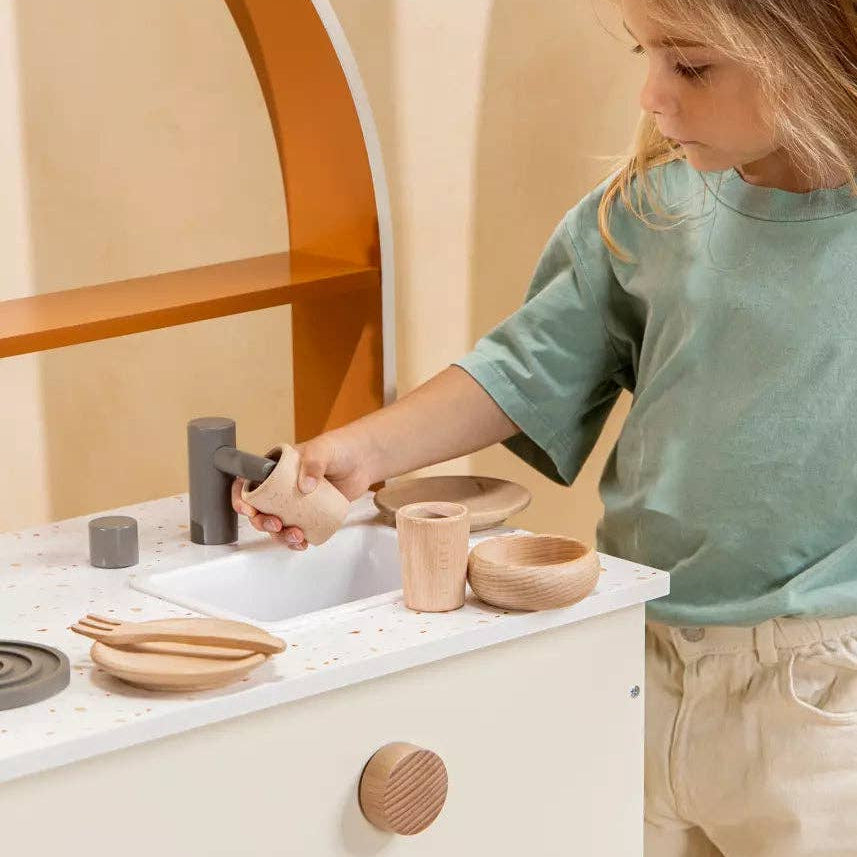
The first question is almost always whether it will fit. A wooden children's kitchen ranges from a compact tabletop model to a substantial piece of furniture with multiple cupboards. So, first grab a tape measure and measure the spot where the kitchen will be placed. Also, take the space in front of it into account, because your child needs to be able to stand there.
Additionally, pay attention to the height. For toddlers, a knee-height kitchen works better because they can easily reach the stove and sink. A taller model often lasts longer but sometimes requires a step stool. In a small room, choose a narrow or corner model against the wall. If you have more space, you could opt for a spacious kitchen where two children can play together.
2. Wooden children's kitchen, what age?
A frequently asked question when buying a wooden play kitchen is which age is best suited. The short answer: most wooden play kitchens are suitable from age 3, and some as early as age 2. Around that age, role-play really starts to take off. Your child imitates what they see happening at home: stirring, serving, pouring a cup of tea.
For a wooden play kitchen for children aged 2 and up, look for sturdy, larger parts without small loose pieces. From age 3, play can be more elaborate, with separate play food and accessories. The great thing is that a kitchen lasts a long time: many children are still playing with it around the age of six or seven. Do you want to know which toys suit which stage? Then also read our overview of Montessori toys by age.
3. Material and safety: what to look out for?
When it comes to what to look out for in a wooden play kitchen, safety comes first. Your child constantly touches the furniture and sometimes puts things in their mouth, so the finish matters. Check if the paint is water-based and saliva-resistant so that nothing harmful comes loose. Edges and corners should be neatly rounded, without splinters or sharp edges.
Also pay attention to quality marks. A CE marking indicates that the product meets European requirements, and the EN71 standard is specifically for toy safety. For the origin of the wood, look for an FSC label, which stands for responsibly managed forests. Many wooden play kitchens are made of MDF in combination with solid wood, which is fine as long as the finish is good. Would you like to delve deeper into the trade-offs between materials? In our article about wood or plastic toys We list the differences.
4. Accessories: is enough included or do you buy them separately?
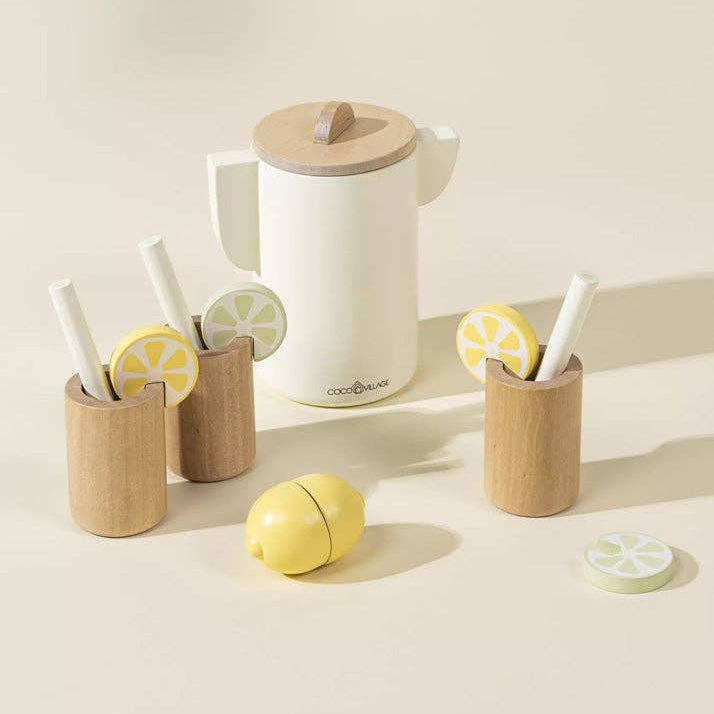
An empty kitchen is fun, but the game truly comes to life with accessories. So take a good look at what's in the box. Some wooden play kitchens come with pots, pans, cutlery, and some play food, while others are plainer and you add to them yourself. Both are perfectly fine, as long as you know what you are buying.
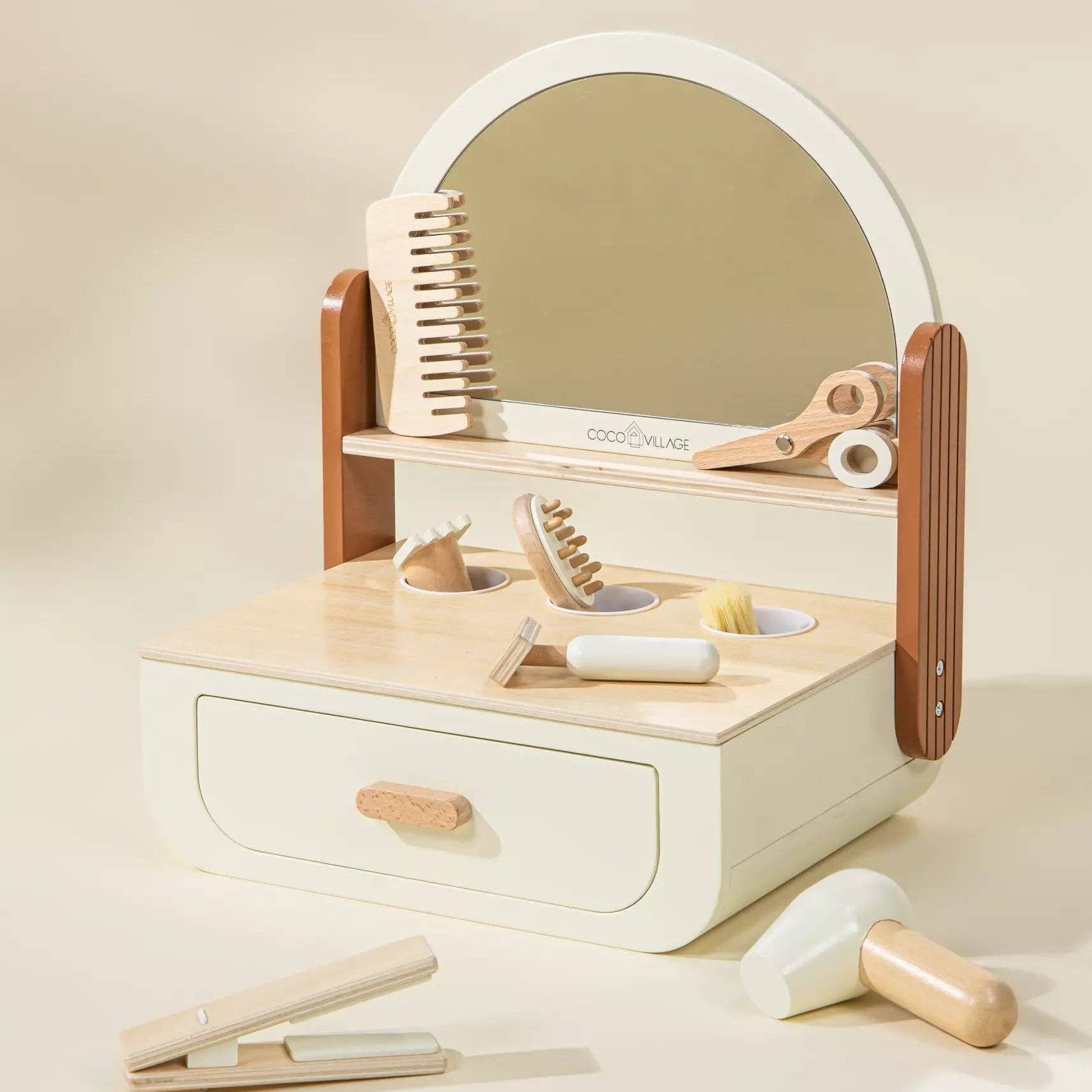
At WoodyKids, in addition to kitchens, you will also find separate wooden children's kitchen accessories that expand the play. We have listed the best ones:
- Pizza oven: Your child slides the slices in, waits until the pizza is ready, and takes it out again. A nice first exercise in patience and sequence.
- Barbecue: Outdoor play indoors. Flipping sausages and corn on the cob, scooping, and serving, all year round.
- Ice cream stand: Scooping balls, putting them in a cone, and paying. Endlessly popular, especially when there are customers in line.
- Market set: Displaying, weighing, and selling wooden vegetables and fruit. Here, your child practices counting, sorting, and taking turns.
- Vegetable and fruit set: Often with Velcro to cut through, nice for little hands and endlessly reusable.
- Tool set: Not cooking but tinkering, for the child who would rather screw and hammer than cook.
This way, you gradually expand the game without buying everything at once. Your child bakes a pizza, buys "fresh" vegetables with the market set, cuts them with the vegetable set, and serves the menu to the stuffed animals. Then comes the ice cream. This is how the kitchen grows along, from a simple stove into a complete restaurant.
5. Stability and construction: can it take a beating?
A wooden children's kitchen takes a lot of abuse. It is pulled, leaned on, and bumped into. That is why a sturdy base is important. When choosing, pay attention to the construction: a kitchen with a wide base or legs that angled slightly outwards is less likely to tip over than a narrow, tall model with a small footprint.
Also feel the connections. Well-assembled panels do not wobble, and the doors and faucet are securely fastened. For a tall, lightweight model, wall mounting can do no harm if children push hard against it. A kitchen that does not wobble or tip over easily provides more playtime fun and peace of mind for you, and lasts longer.
6. Price and quality: what is a good wooden children's kitchen worth?
The price of a wooden children's kitchen depends mainly on the size and what is included. At WoodyKids, the range runs from approximately 29.95 euros for compact sets and accessories to around 129.95 euros for an extensive kitchen. A higher price usually means a larger piece of furniture, better finish, and more parts.
Investing in quality pays off, because a sturdy wooden kitchen lasts for years and can often be passed on to a younger brother, sister, or friend. That is also what makes it such a great gift: it is not a toy that ends up in the corner after a week. If you give it as a baby shower gift or a birthday present, you are choosing something the parents will be happy with for a long time.
The right place: where do you put the kitchen?
The location often determines how much the kitchen is played with. Put it somewhere where your child feels comfortable, and not in a forgotten corner they never visit. A child plays longer in the living room or a nearby play area, precisely because they feel you close by.
Practically speaking, it is best to place a play kitchen with the back against the wall. This provides stability and prevents it from tipping over if your child pulls on it, and most models are designed to be played with from the front. Keep the walkway clear and leave enough room at the front to stand and play together. A flat, hard floor works better than a thick, high-pile rug.
Maintenance and cleaning: how to keep the kitchen beautiful
Wooden toys last a long time if you take good care of them, and fortunately, that is simple. Clean the kitchen and accessories with a slightly damp cloth, possibly with a very mild soap solution, and then dry the wood thoroughly. Never submerge wooden parts in water or put them in the dishwasher. Water seeps into the wood, which can cause it to swell, warp, or become rough, and the paint to peel off.
Check the kitchen occasionally. Sand a rough spot smooth with fine sandpaper, or tighten a loose door or screw. Doing this once a season keeps the kitchen safe and the game running smoothly. Does your child eventually outgrow it? Store the kitchen clean and dry, or pass it on to the next child.
Our tips per situation
Not every situation calls for the same kitchen. A few concrete suggestions:
- Small room: Choose a compact or narrow model and expand with separate accessories instead of a large piece of furniture.
- For a toddler (from 2 years): Opt for a knee-high kitchen with larger, sturdy components and few small, loose pieces.
- As a gift: A medium-sized kitchen with some play food looks spacious and is ready to play with immediately.
- For years of enjoyment: Choose a sturdier model and later supplement the game with a pizza oven, market set, or tool set.
Those who seek exercise in addition to cooking can combine the game with balance stepping stonesThis way, you alternate quiet role-playing with climbing and balancing in the same play area.
View the wooden play kitchens from WoodyKids
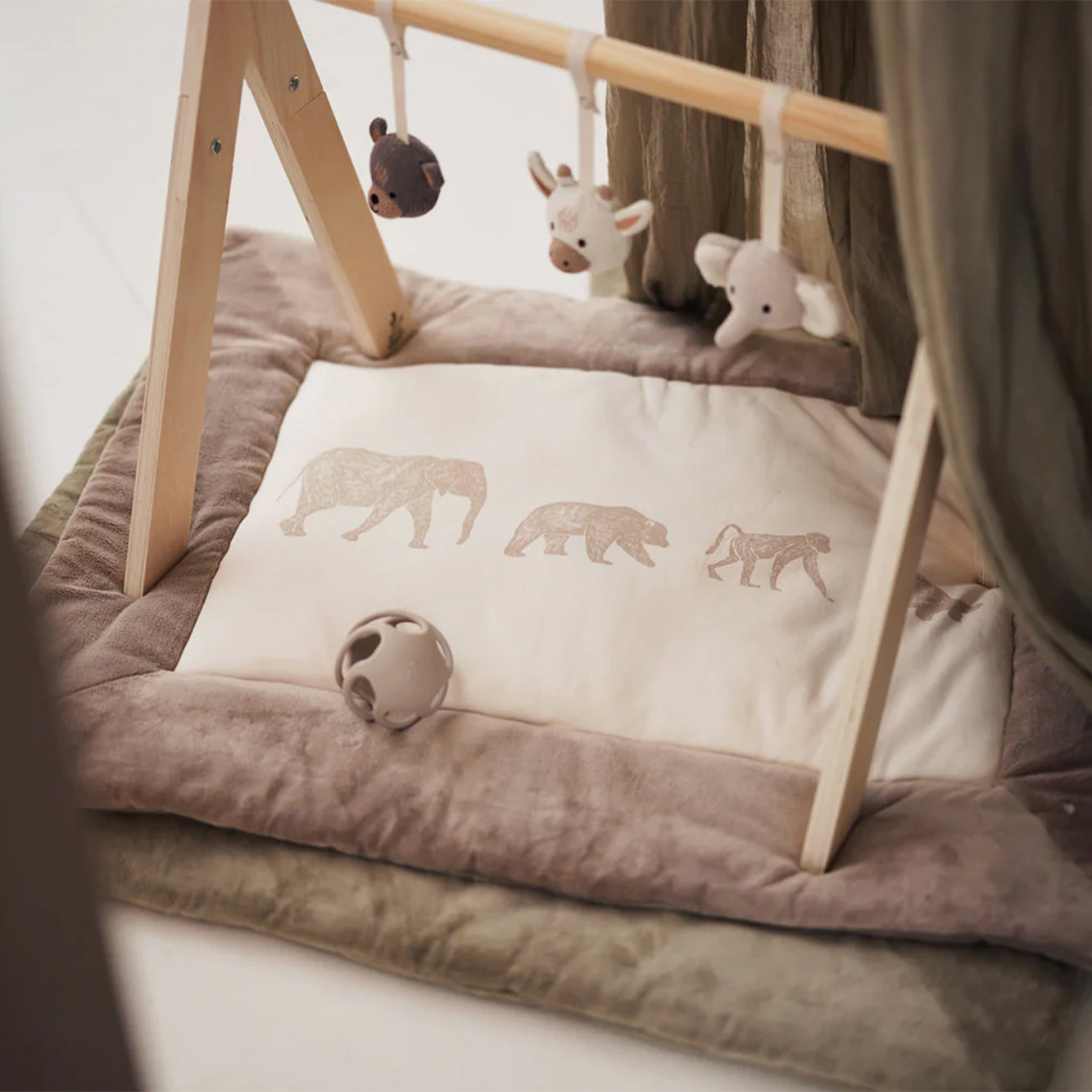
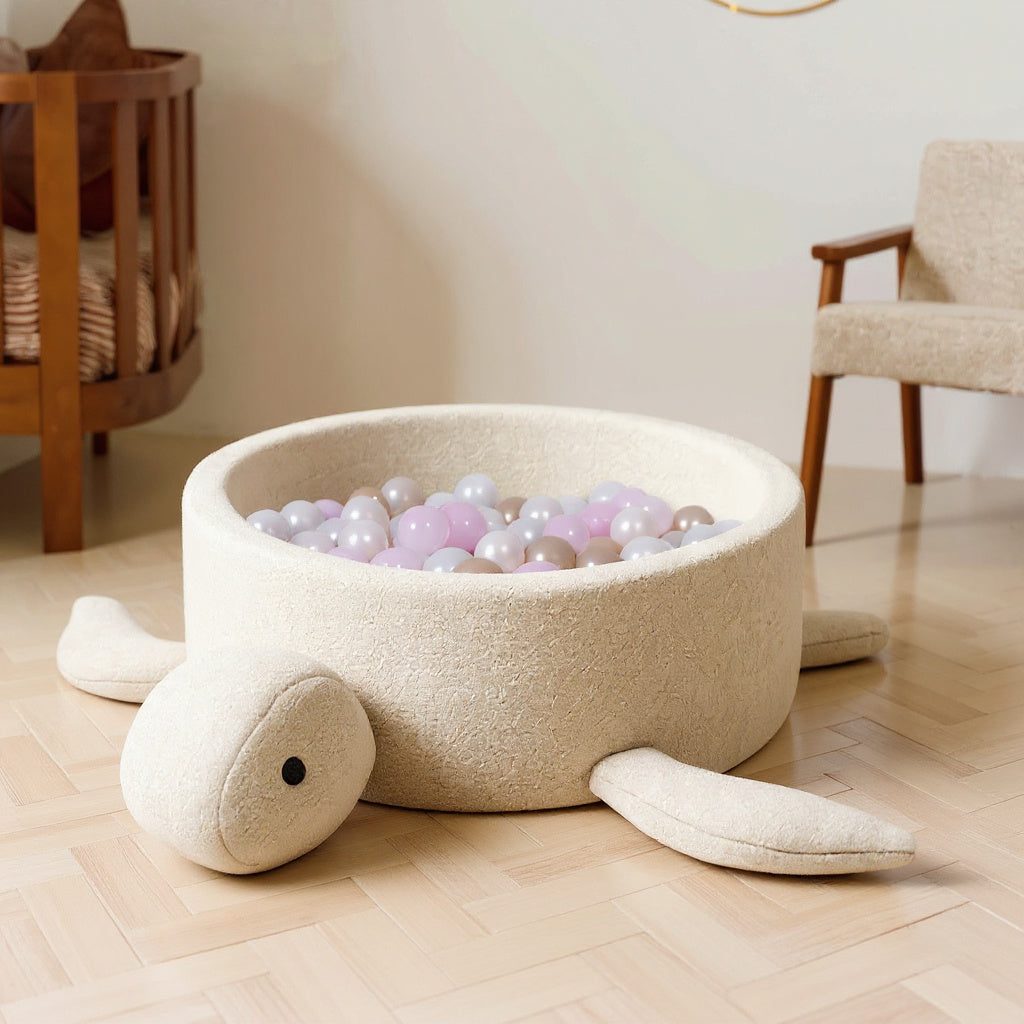
Do you know what to look out for now? Then it's time to see what fits. In our collection wooden toys You will find wooden children's kitchens and matching accessories from Coco Village, from compact sets to elaborate kitchens with a pizza oven, barbecue, and ice cream stand. If you want to look around more broadly, for example at a baby gym from Jollein, a play tent from Babiem, or a ball pit from MeowBaby, then take a look in all toys.
Need help choosing between models that grow with your child? Then read our article on wooden toys that grow with you and find the kitchen that fits your play corner.
Frequently Asked Questions
From what age is a wooden play kitchen suitable?
Most wooden play kitchens are suitable from age 3, and some as early as age 2. Around that age, role-playing starts to develop, and your child begins to imitate what they see at home. For the very youngest, choose a model with larger, sturdy parts without small loose pieces.
Where is the best place to put a wooden children's kitchen?
Place the kitchen in a spot where your child likes to be, for example in the living room or a nearby play corner, as they will play there for longer. Place the back against the wall for stability, keep the walkway clear, and leave enough room at the front to stand and play together. A flat floor works better than a thick rug.
How do you clean a wooden play kitchen?
Use a slightly damp cloth, optionally with a very mild soap solution, and then dry the wood thoroughly. Do not immerse wooden parts in water and never put them in the dishwasher, as this will cause the wood to swell or warp. Sand any rough spots smooth with fine sandpaper.
What safety aspects should you look out for in a wooden play kitchen?
Look for water-based paint, rounded edges without splinters, and sturdy joints. Also look for quality marks such as CE and the EN71 toy standard, and for an FSC label for the wood. A kitchen that does not wobble or tip over easily is safer for daily use.
Which accessories do you need?
With a few pots and pans and some play food, your child can already get started. If you want to expand the game, a pizza oven, barbecue, ice cream stand, market set, or tool set make fun additions. Check what is included with the kitchen first, so you know what you need to order separately.
How much does a good wooden children's kitchen cost?
At WoodyKids, the range extends from approximately 29.95 euros for compact sets and accessories to around 129.95 euros for an extensive kitchen. The price depends mainly on the size and what is included. A sturdier model lasts for years and can often be passed on to the next child, which also makes it a nice gift.