

Article: Wooden toys that grow with your child
Wooden toys that grow with your child
You buy something beautiful made of wood, your child plays with it for two weeks, and then it disappears into the closet. Sound familiar? With good wooden toys That actually doesn't have to happen. The trick isn't in the most expensive or the most beautiful piece, but in toys that grow with your child. A set of wooden blocks does something completely different for a baby than for a toddler, and therefore remains relevant for years. In this guide, we explain how to choose wooden toys that keep them engaged, what works for each age, which mistakes to avoid, and what to look for when buying wooden toys.
Wooden toys that last for years: why this is smart
Growing along means that a toy changes along with what your child can do and enjoys. Not because of buttons or stickers that you replace, but because the play itself allows room. A one-and-a-half-year-old stacks and knocks things over. That same child, at four, builds a tower, a garage, or a zoo. The toy remained the same; the child outgrew it.
That principle is valuable for anyone who buys toys, but certainly for parents who make conscious choices, and for grandparents and generous gift-givers who want to give something that doesn't become boring after a month. You often pay a bit more for a wooden piece than for plastic, but you spread that price over years of play rather than weeks. On top of that, wood is durable and can be passed down to a brother, a sister, or the neighbors. A block that can take a knock literally lasts a child's lifetime.
The common thread is therefore simple: choose toys that are open to different ways of playing. A handy test at the checkout: imagine how your child will play with it in two years. If you can picture that, you're on the right track. Further on, you will see what that looks like with real examples from our assortment.
Why wooden toys? The benefits at a glance
First, a brief overview of the benefits of wooden toys. Not as a sales pitch, but because they directly explain why wood grows with the child so well.
Wood lasts a long time and is easy to pass on. A wooden play kitchen or a set of blocks will outlast multiple children, whereas much plastic toy cracks or breaks after intensive use. This often makes wood more economical and sustainable in the long run, even though the initial purchase may seem somewhat higher.
The material feels different. Wood has weight, grain, and a warm touch. A wooden block that you lift immediately gives your little hand information about weight and balance, something a hollow plastic block does not do. That sensory experience is valuable for young children who discover the world primarily with their hands and mouths.
Wooden toys often have a quieter effect. They make no noise, do not flash, and do not require directing. As a result, your child determines the pace and the story themselves. A child who disappears into a game and is not interrupted by sounds plays longer and with greater concentration.
Finally, wood trains fine motor skills and imagination. Stacking, sorting, fitting together, and balancing require precise hands. And because a wooden apple remains just an apple (and not a talking, blinking thing), your child has to give it meaning themselves. That is exactly where imagination grows.
Do you really want to compare wood and plastic side by side, with all the honest nuances? We cover that separately in wood or plastic toysFor toys that grow with your child, wood certainly has a few clear advantages.
Open-ended wooden toys: the key to growing with your child
If one concept is central to this guide, it is this: open-ended toys. These are items without a fixed end goal and without a fixed way of playing with them. A puzzle is finished when the last piece is in place. Open-ended wooden toys are never "finished," because your child decides for themselves what they become.
The beauty of it is that the same object grows with age. Take a set of wooden blocks. A one-year-old picks them up, feels them, stacks two, and knocks them over again. That same five-year-old builds a castle with them, uses them as food in a game, or lays an entire road for his cars. The child changed, and the game grew with them.
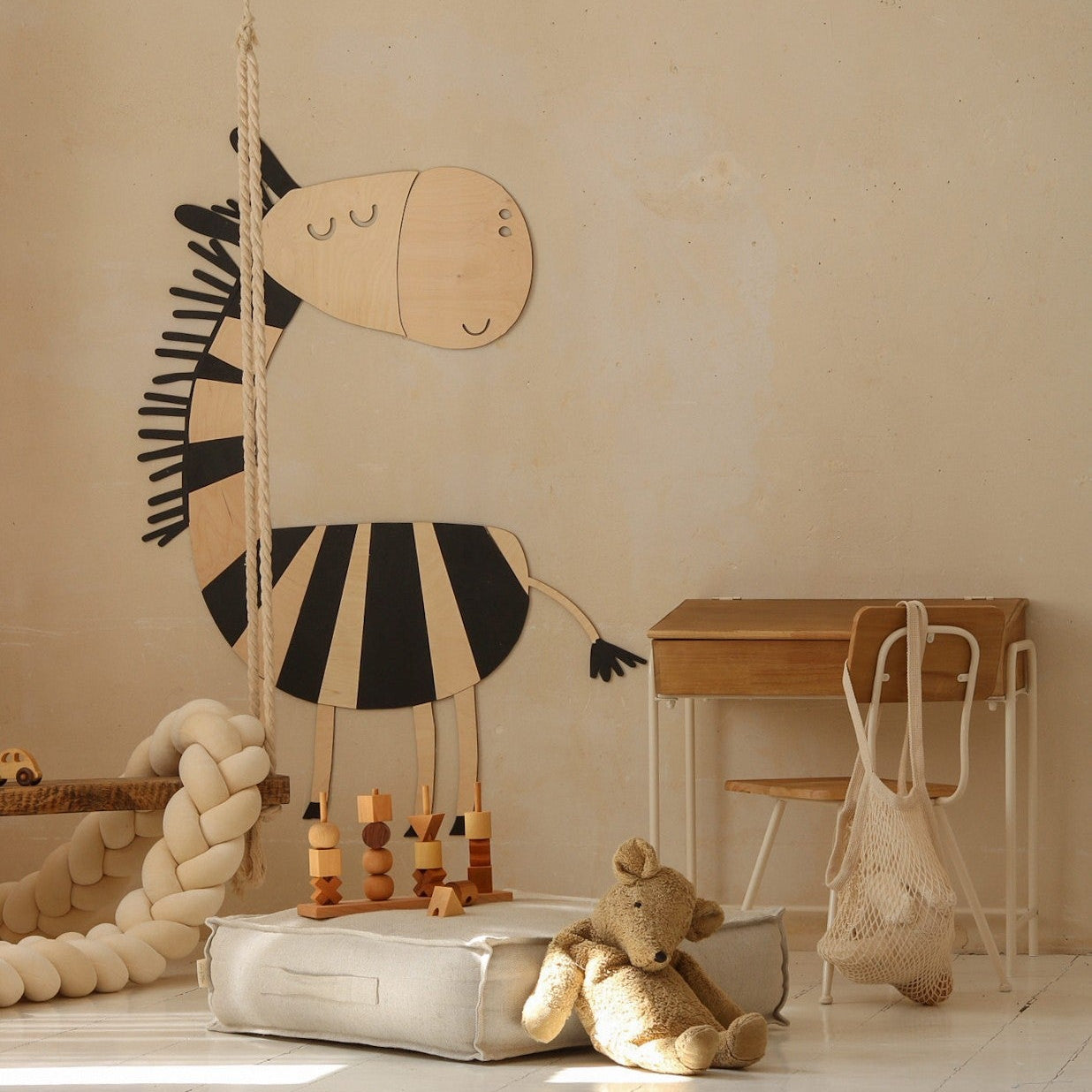
Balance stepping stones are another great example. For a toddler, they are low steps to clamber over; a preschooler turns them into an obstacle course where the floor is lava and the stones are safe islands. You can find them in our climbing and play products.
Moreover, open-ended toys can be combined. Blocks fit with the kitchen (as bread or cake), with the cars (as a garage), and with the stuffed animals (as a bed). The more a piece interacts with the rest of the play corner, the more often your child will pick it up. So, if you have to choose between toys with a fixed function and toys that can be used in many ways, choose the latter. It is almost always the piece that lasts the longest.
Wooden toys by age: a quick overview
Age is a useful starting point, but not a hard and fast rule. One child might already be actively role-playing at age two, while another continues to build on it for longer. Therefore, use the classification below as a guideline and, above all, look at what your child is currently doing. Do you want to really delve deeper by age? Then read our comprehensive overview of Montessori toys by ageWe will keep it short here.
Baby (0 to 1 year)
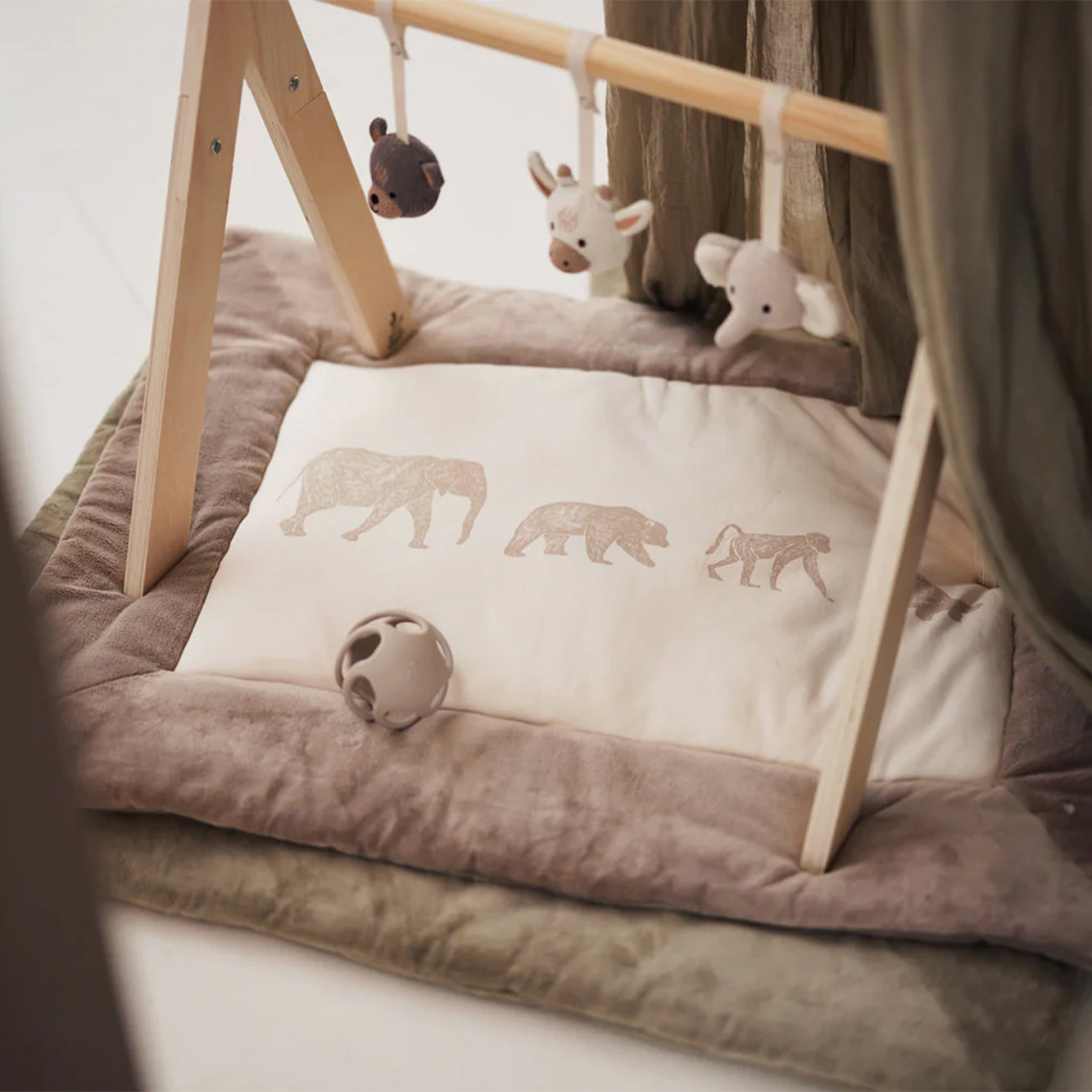
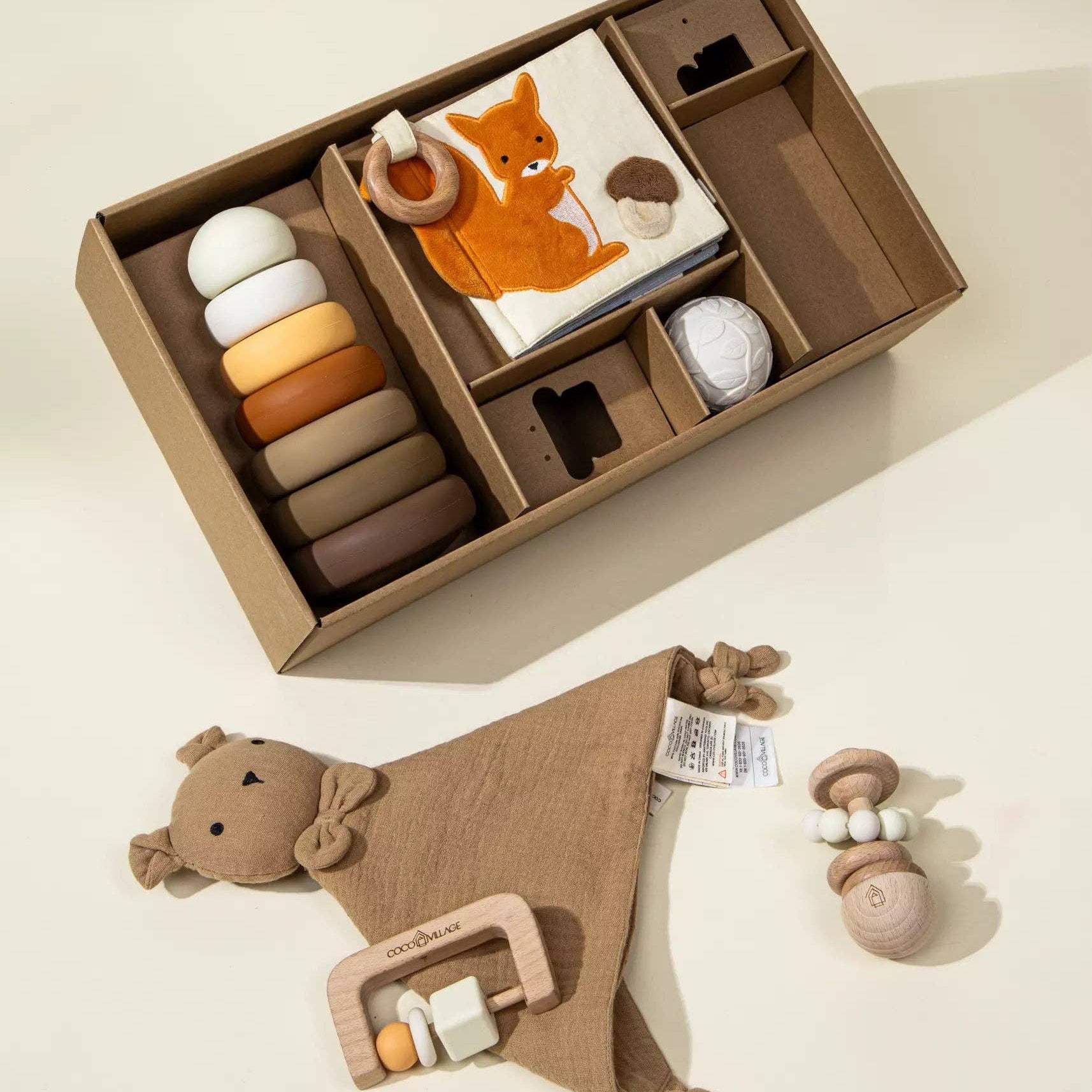
A baby explores with their hands and mouth. Think of something to grasp, feel, and hear: a baby gym to reach for, a soft rattle, a soft toy to hold. It is about grasping, focusing, and the first stimuli, not about building or playing according to rules.
Toddler (1 to 3 years)
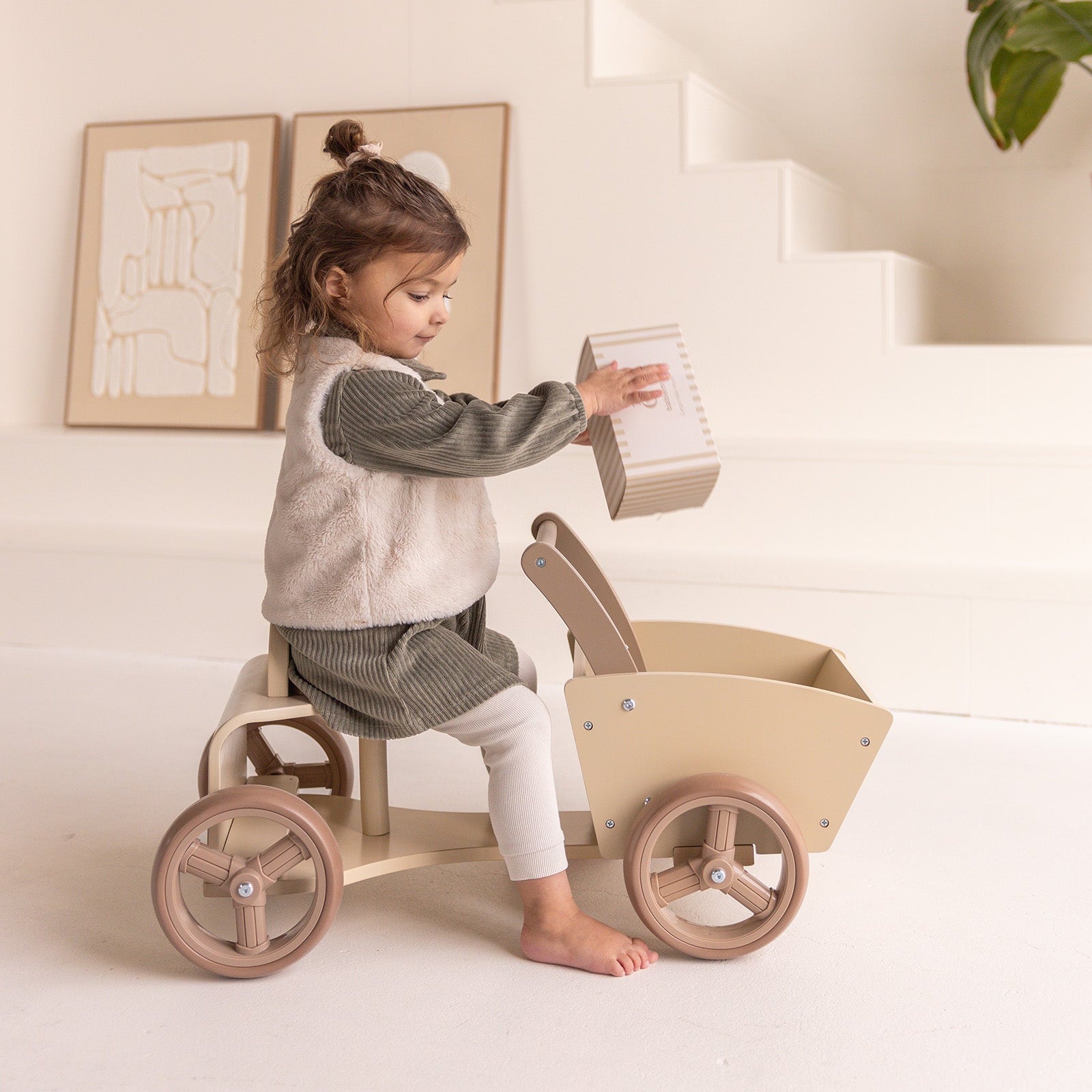
Now comes stacking, sorting, pushing, and pulling. Blocks, a pull-along toy, a simple shape sorter: anything that trains the little hands and lets the child discover how things fit and fall. This is also where the very first imaginative play begins, such as pretending a block is a telephone.
Preschooler (3 to 4 years and older)
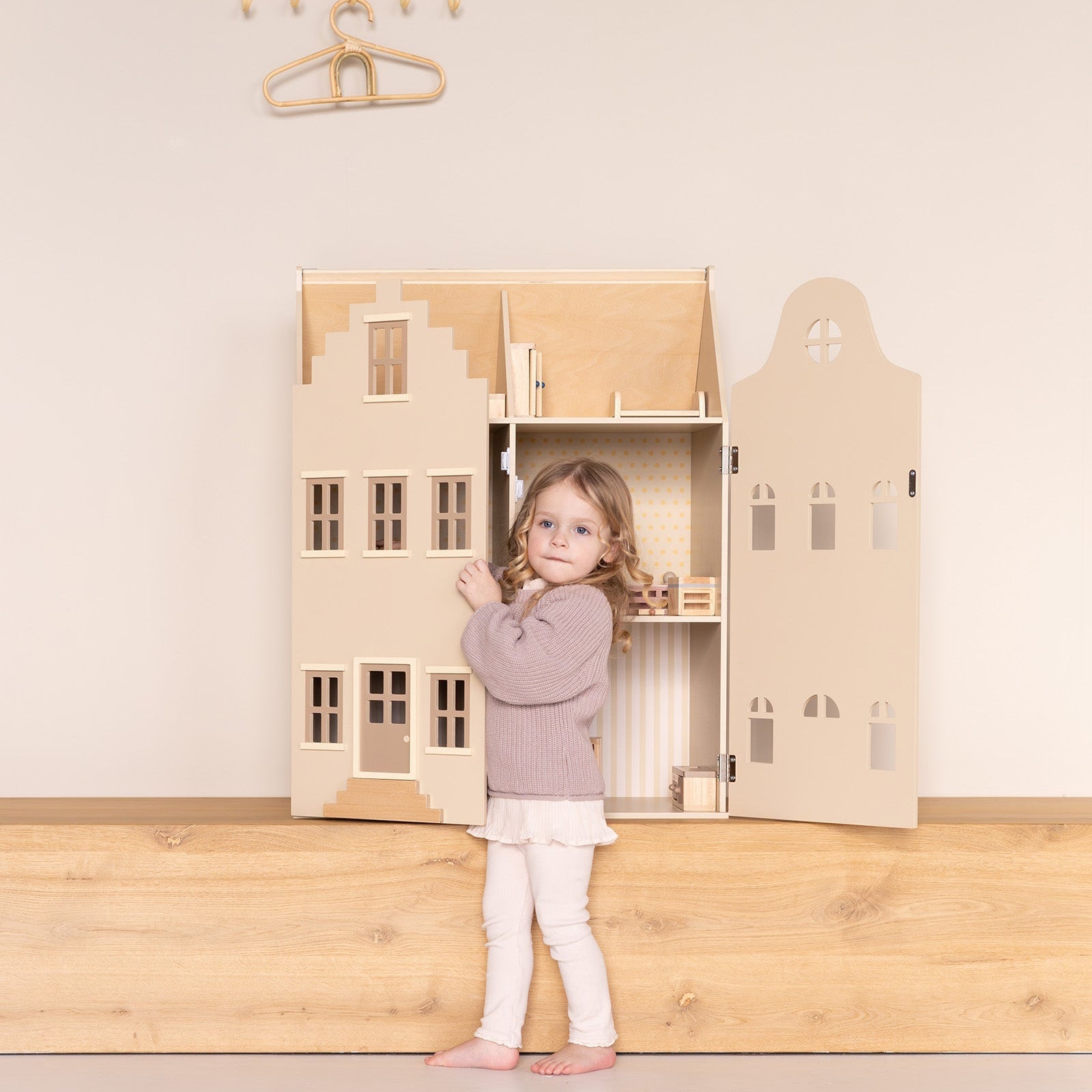
Role-playing is now in full swing. Your child cooks, repairs, shops, and acts out entire stories. A kitchen, a tool set, or a market stall fit right in here. This is also the age when open-ended toys truly show their value, as your child builds their own worlds with them.
What remains captivating across all those phases? Exactly, open-ended toys: blocks, stepping stones, and role-play sets that move along with your child.
Types of wooden toys in our collection
Below, we highlight a few categories from our collection of wooden toys out, so that you see how the growth principle works in practice.
Roleplay: kitchen, pizza oven, barbecue, and ice cream stand
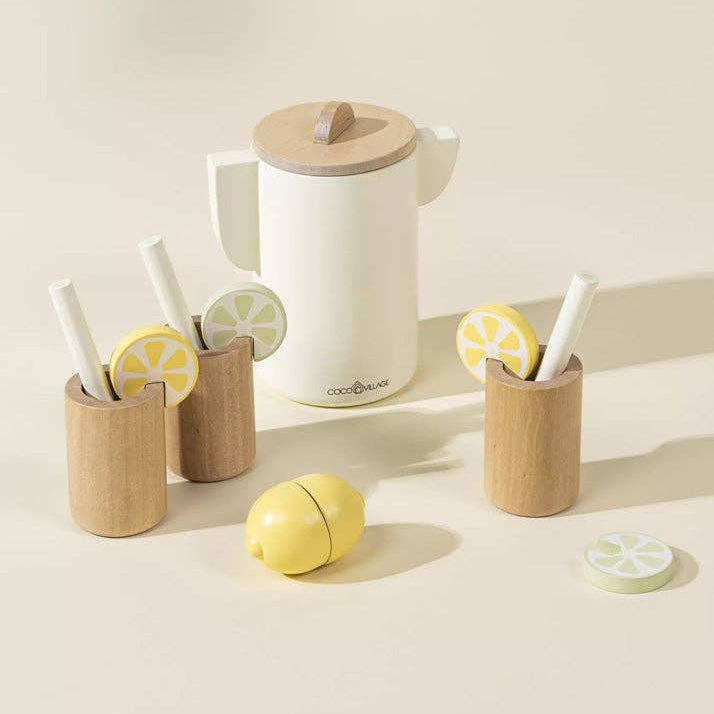
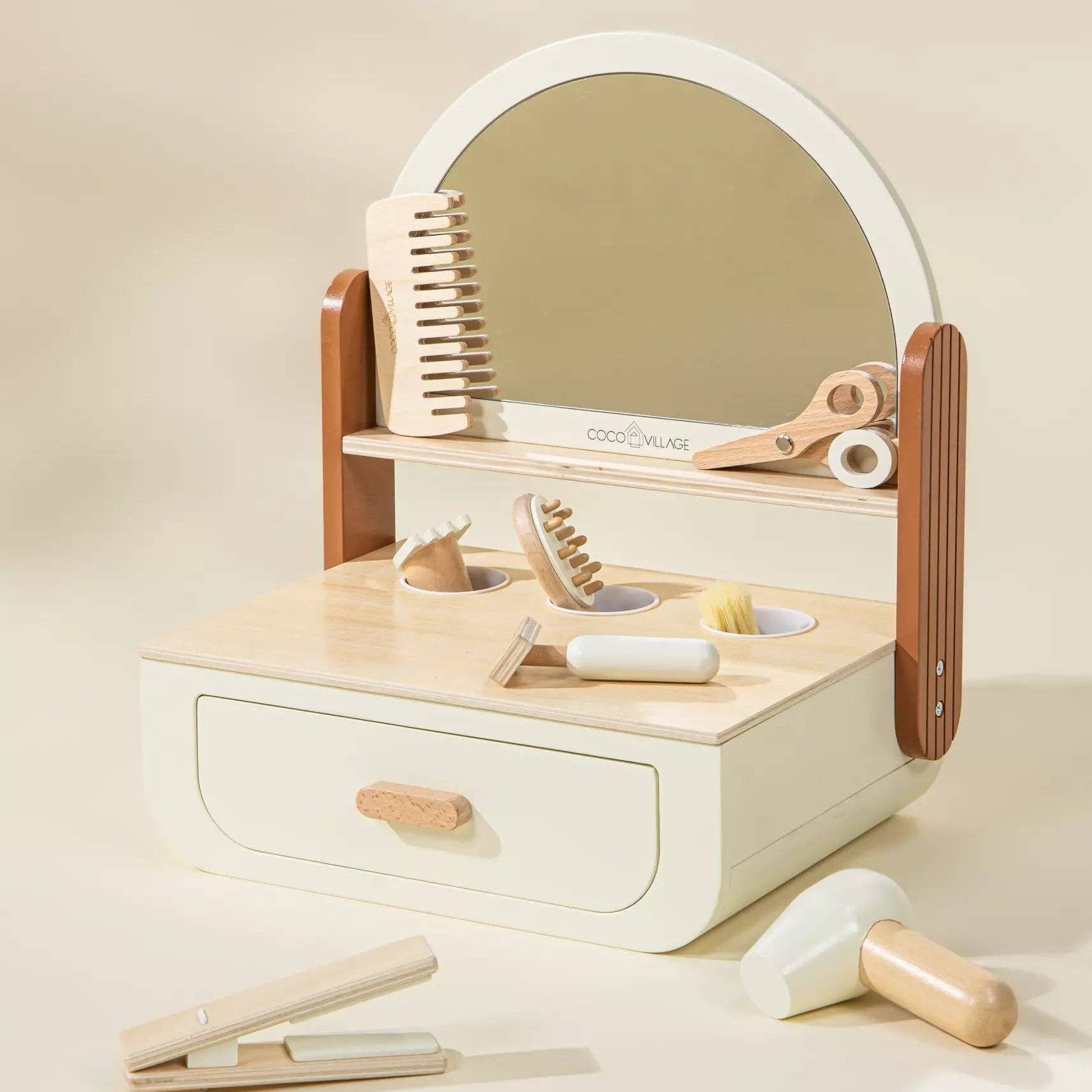
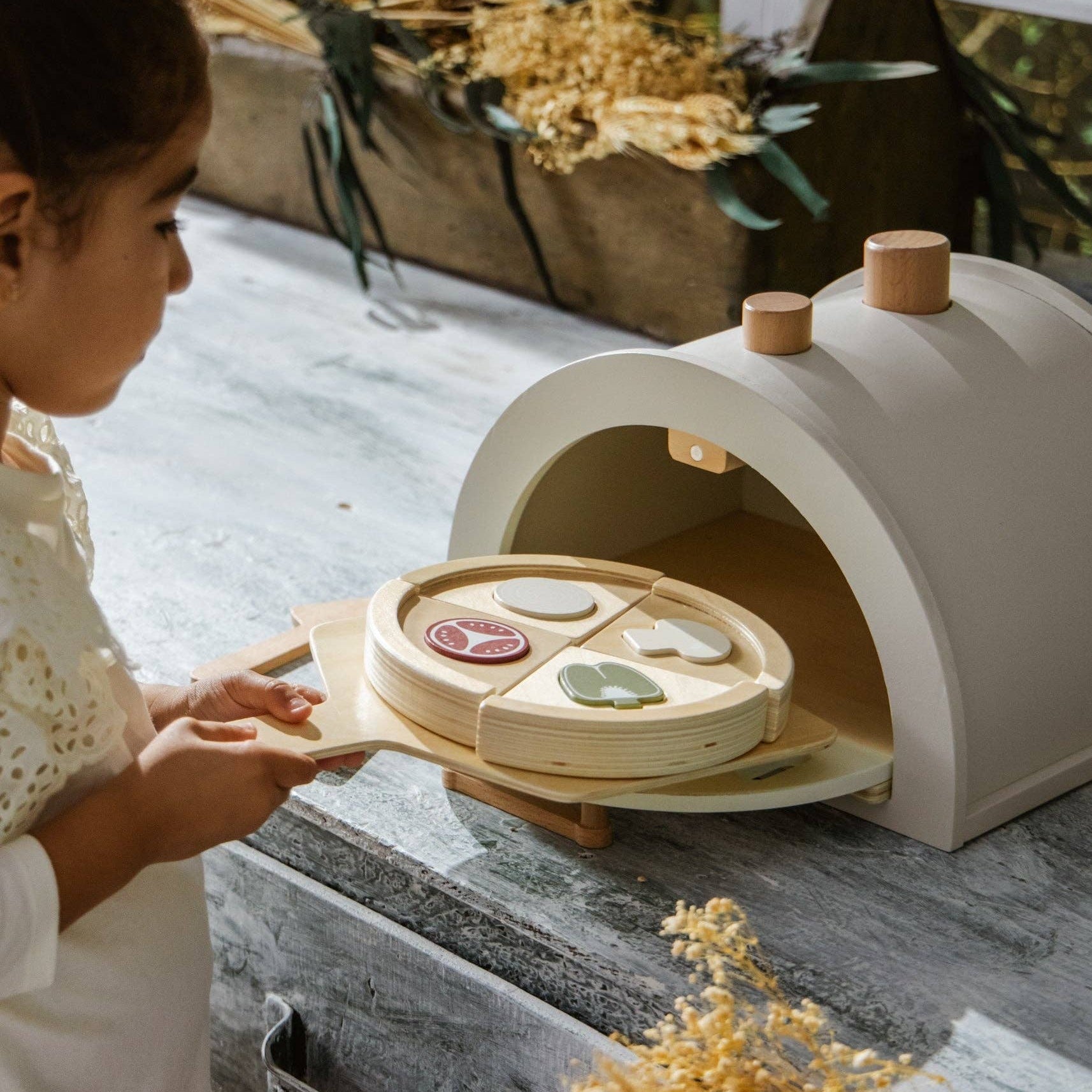
Role-play is the driving force behind imaginative play in preschoolers, and here we have a lot of wooden toys from Coco Village. A wooden play kitchen is the most well-known example, but there is more: a separate pizza oven, an outdoor barbecue recreated in the living room, and an ice cream stand where your child "sells" ice cream. The beauty of a kitchen is that it lasts for years because the play evolves along with it. At first, it's tipping over pots and pretending there's soup inside; later, it becomes entire three-course meals for the family.
What makes this so great for growing with is that you can expand it step by step. Start with the kitchen itself, add a vegetable set later when cooking gets more serious, and place an ice cream stand or pizza oven next to it as soon as your child plays out entire scenarios with customers and menus. This way, the same corner changes along with your child's phase, without you having to replace anything. Before purchasing such a kitchen, read our separate guide on a choosing a wooden children's kitchen.
Tools and market sets
A wooden tool set lets your child screw, hammer, and tinker, great for fine motor skills and endless role-play as a little handyman. For a toddler, it is mainly fun to grab the hammer and tap on something, while a preschooler really gets to work: tightening a plank, "repairing" something that is broken, or helping you with DIY projects. The same set therefore grows with them, from random tapping to purposeful imitation.
Market sets with wooden vegetables and fruit work just the same way. A toddler practices pulling apart and pressing back together the vegetables sawn in half with Velcro, while an older preschooler handles the checkout, gives change, and compiles a shopping list. Moreover, these sets combine nicely with a kitchen or ice cream stand: the vegetables from the market end up in the pan on the stove. In our assortment, prices for this type of wooden toy range from approximately 29.95 euros for a set to around 129.95 euros for the larger pieces.
Balance stepping stones and movement
Balance stepping stones train balance and gross motor skills, and your child invents their own games to go with them. For a toddler, the challenge is simply standing on them and stepping off again without falling over, with a helping hand. A preschooler places the stones further apart and jumps from one to the other. You can set up the route differently each time, so the challenge remains tailored to what your child can handle. This makes them a prime example of toys that grow with your child. View them among our balance stepping stones and other climbing and play products.
For the very little ones: baby and toddler
Our collection extends beyond just wood, and specifically for babies and toddlers, you will find brands that seamlessly align with the early stages. Think of a Jollein baby gym where your child learns to reach for the toys, soft cuddles made of natural fabric for comfort and first sensory stimulation, and play tents and pull-along toys from Babiem that provide just the right nudge towards independent movement. A ball pit is also part of this phase: for a baby, it involves sitting safely and feeling the balls; for a toddler, it becomes climbing in and out and throwing accurately. If you want to know what to look out for regarding age, safety, and the number of balls, read our separate guide on a buy ball pit, with MeowBaby ball pits as examples, among others. This way, you gradually build up from birth to the wooden toys that take center stage during the toddler and preschool years. You can see everything in an overview in our toy collection.
Common mistakes when buying wooden toys
Choosing good wooden toys isn't difficult, but there are a few pitfalls that cost money without your child getting long-lasting enjoyment out of them. Below are the four we see most often, along with what to do instead.
Buy by brand or label, not by moment of play.
A well-known brand or the word "educational" on the box says little in itself about how long your child will play with it. A beautiful wooden sorting set will remain in the cupboard if your child is actually in the role-playing phase and would rather be cooking and tinkering. Therefore, turn it around: first look at the play moment (is it stacking, sorting, acting out stories?) and find the toy that matches that. The brand and the label come only after that.
Lots of little things instead of a good open-ended piece
It feels generous to show up with five small gifts, and individual trinkets are often cheap. But it is precisely those small things that are played with for a week and disappear into a drawer. One good open-ended piece, such as a set of blocks, stepping stones, or a play kitchen, will keep your child entertained for years. So, it is better to get something solid that grows with them than a pile of toys that quickly becomes boring.
Rely solely on the age sticker
The age indication on the packaging is important for safety—think of small parts for children under three—but it is not an exact predictor of what your child likes. One child might be fully engaged in role-playing by the age of two, while another continues stacking for longer, and both are perfectly fine. So use the sticker as a safety check, not the sole criterion, and also consider your child's current interests.
Forgot space and storage
A large play kitchen, a set of stepping stones, or a ball pit is great, but it does need a designated spot. Toys that don't have anywhere to stand often end up back in the box and are never picked up again. Therefore, measure beforehand to see if it fits, including the surrounding space where your child needs to be able to move, and consider where it can go in the evening. Toys with their own accessible spot are picked up more often on their own and stay in view longer.
Buying wooden toys: what to look for?
The errors mentioned above concern the selection of the correct part. Once you have that sorted, two quality and safety checks remain.
- Open ending. Ask yourself: can my child play with this in multiple ways? If so, it will probably grow with them. If not, there is a greater chance that they will get bored quickly.
- Materials and quality marks. Look for sturdy, smoothly finished wood without splinters and water-based paint. Toys sold in the EU are required to have a CE marking in any case.
Maintaining and cleaning wooden toys
Proper maintenance is exactly what makes wooden toys last so long, and it is simple. Clean the wood with a slightly damp cloth and, if necessary, a very mild soap solution, and then dry it thoroughly. Never submerge wooden toys in water or put them in the dishwasher. Water seeps into the wood, which can cause it to swell, warp, or become rough.
Check for wear occasionally. Sand a rough spot smooth with fine sandpaper, and tighten any loose parts. Once a season is enough to keep the toys safe and looking good.
And what if your child has outgrown it? Store it away clean and dry, or pass it on. A well-maintained wooden play kitchen or a set of blocks will make the next child just as happy. Passing it on is perhaps the most beautiful proof that you have bought something that truly grows with them.
Discover our collection of wooden toys
Ready to choose something that lasts for years? Check out all our wooden toys, from kitchens and market sets to blocks and more. If you are looking for something that moves and challenges, take a look at our climbing and play productsAnd if you want to see the entire range, including baby and toddler, browse through all toysChoose an open end, choose sturdy, and your child will enjoy playing with it for years.
Frequently Asked Questions
From what age are wooden toys suitable?
Wooden toys are available for every age, including babies. For the very little ones, choose grasping and tactile toys such as a baby gym or a wooden rattle. Always check the age indication on the packaging, as small parts are not suitable for children under three years old.
Which wooden toys grow with the child the longest?
Open-ended toys last the longest because your child gives them their own interpretation. Think of wooden blocks, stepping stones, and role-play sets such as a kitchen or market stall. These remain interesting from toddler to preschooler and beyond, because the play changes with age.
What is open-ended wooden toy?
Open-ended wooden toys are toys without a fixed purpose and without a fixed way to play with them. A set of blocks can become a tower, a road, or pretend food, depending on what your child comes up with. It is precisely because of this that they remain engaging for a long time and grow along with your child's imagination.
Which mistakes are best avoided when buying wooden toys?
The four most common mistakes are: buying based on brand or label instead of what your child is currently doing, buying many small items instead of a good open-ended piece, relying solely on the age sticker, and forgetting about space and storage. Instead, choose based on playtime, go for a sturdy piece that grows with your child, and give it a permanent spot in the house.
How do I safely clean wooden toys?
Use a slightly damp cloth, optionally with a very mild soap solution, and then dry the wood thoroughly. Do not immerse wooden toys in water and never put them in the dishwasher, as this will cause the wood to swell or warp. Sand any rough spots smooth with fine sandpaper.
What should I look out for when buying wooden toys?
Consider your child's age and interests, and preferably choose open-ended toys that can be used in multiple ways. Check for sturdy, smoothly finished wood, water-based paint, and a CE marking. Finally, take into account the space in your home for larger pieces.
How much do good wooden toys cost?
That depends heavily on the type. A set of wooden vegetables or tools starts at around 29.95 euros in our collection, while larger pieces such as a play kitchen go up to approximately 129.95 euros. Because good wooden toys last for years and can be passed down, you spread that price over a long period of play.